



Categories
blog

Why not enjoy solitude with Japanese candles in this COVID-19 era? - The difference between Japanese and Western candles -

What are Japanese candles?

extracted from the berries of the Japanese wax tree (Japan waxRhus succedanea) grown in western Japan, the wick is made from rush grass, the same material used in tatami mats. The hollow, cylindrical wick allows it to absorb the wax quickly, minimizing dripping. In historic temples, the soot produced is light and easy to clean, preventing staining of expensive Buddhist artifacts. The large, beautiful flame also contributes to its continued use for hundreds of years.
Furthermore, to maintain its high quality and use of expensive natural materials, each candle is handcrafted with passion by skilled artisans. This limits the number produced, making them more expensive than Western candles. But try lighting a Japanese candle. Before you know it, you'll feel like the protagonist of a historical drama. Like the annual "1 Million People Candle Night" held nationwide, why not turn off all the lights in your house for an hour and enjoy a quiet conversation with your family in the darkness?

What are Western candles?

They are made from paraffin, a raw material extracted from petroleum, and have a thread wick. For example, those colorful candles that come with birthday cakes are Western candles. You've probably had the experience of a little candle dripping onto the delicious cake. When Western candles burn, they produce stickier soot than Japanese candles, which can stick to Buddhist altar fittings and damage their surfaces. However, Western candles can be mass-produced by machine, so the raw materials are inexpensive and they are commonly used

The difference between Japanese and Western candles in how they burn

Comparing the burning characteristics of Japanese and Western candles, the flame of a Japanese candle is large and flickers dramatically, almost as if a soul is connecting with it, while a Western candle burns quietly and gently. In this

unprecedented COVID-19 crisis, and especially in these lonely times,
why not find a new source of joy in your heart with a Japanese candle?
Categories
Blog Wax

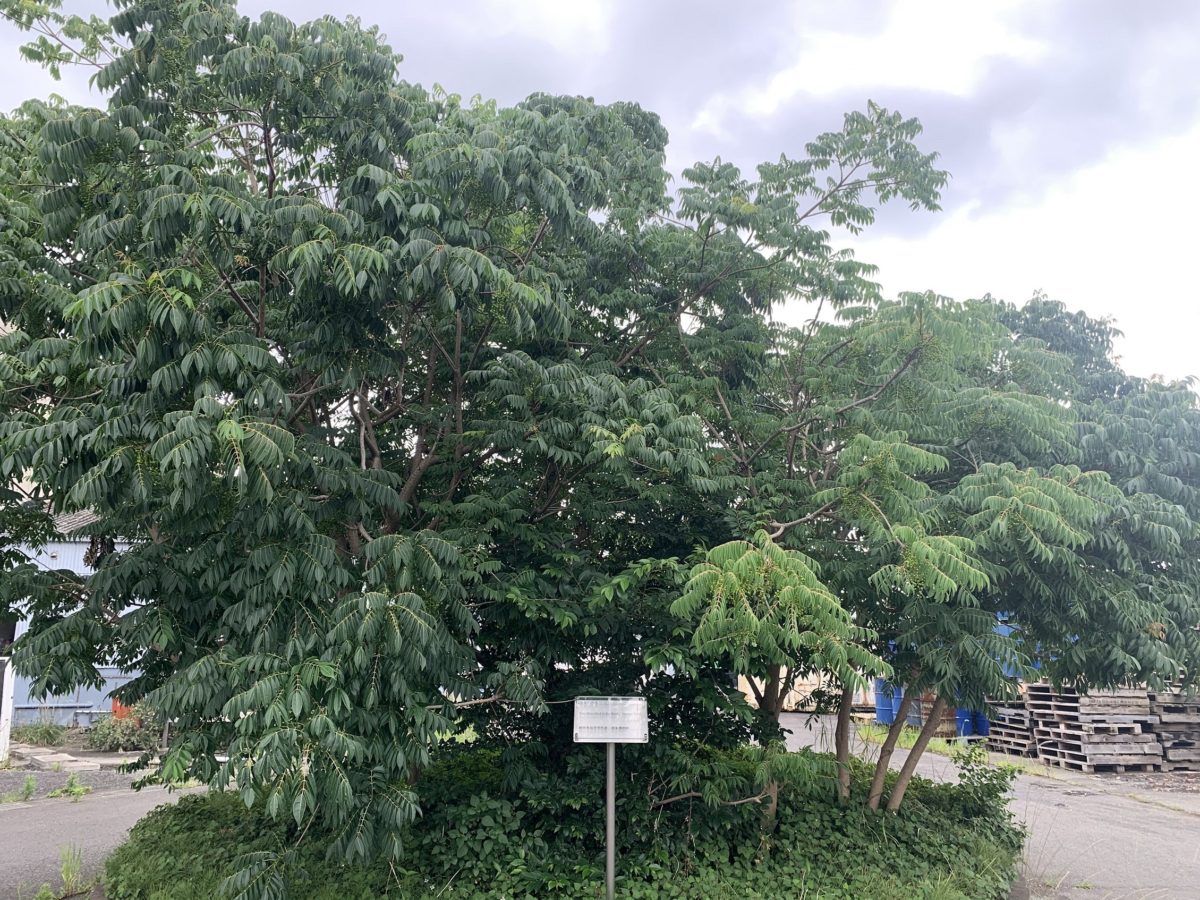
A beautiful and majestic hazel tree in the courtyard during the rainy season

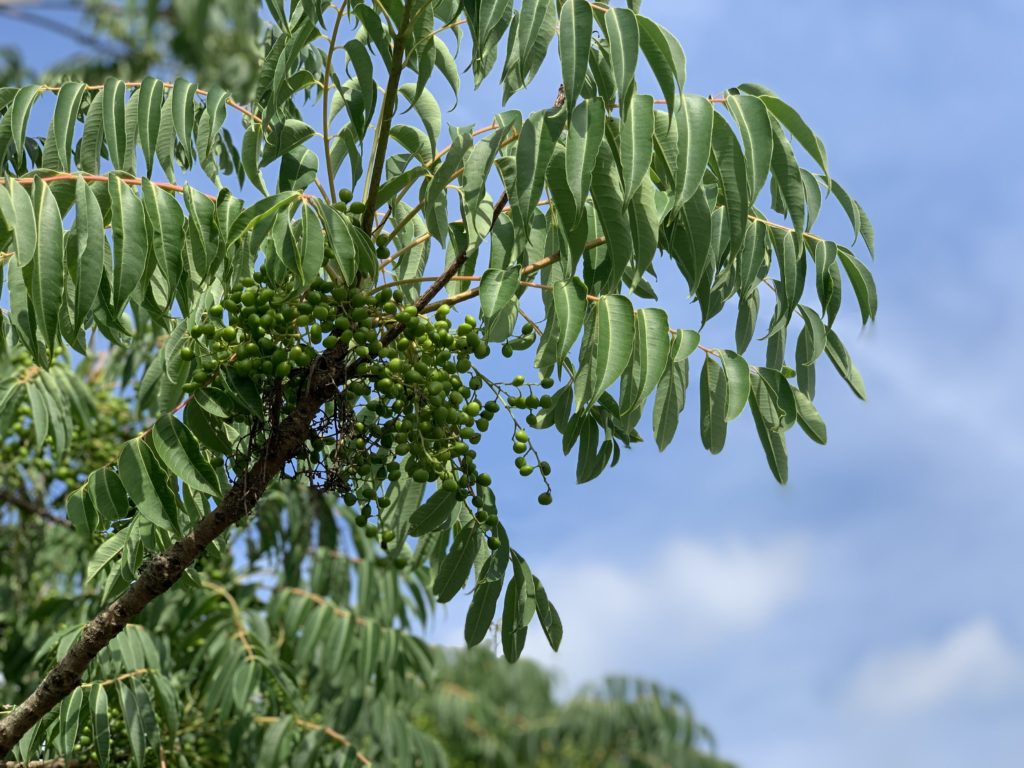
In the courtyard of our company in central Kanagawa Prefecture, there is a power spot: a hazel tree with fresh green leaves and young green fruit. As a symbol of our long-lived company with a history of 188 years, its vibrant appearance continues to brighten the hearts of CERARICA employees today
The nuts of the Japanese wax tree are the raw material for Japan wax , which has long been used in hair care and makeup cosmetics. After the leaves turn beautiful red in autumn and winter, the nuts turn color and are harvested, extracted, refined, and used to make the wax used in sumo wrestlers' hair care productsLarge GinkgoLarge oak treeand the royal womenLong hanging hairSmoothIt is also used in the currently popularYellow oak-dyed robeKorozen's Law" is a plant dye made from hazelnut branches
Wax trees grow in warm regions, and in Japan they have been selectively bred and planted in western Japan, especially in Kyushu and Shikoku, since the Edo period. Wax trees in our company's Kanto region also produce beautiful fruit, making them ideal garden trees for enthusiasts in the Tokyo metropolitan area
As previously mentioned on our website, we are running a "Haze no Mi School" where our employees teach people in Kyushu, Shikoku, and other regions about harvesting haze berries, providing modern know-how that allows anyone to harvest them safely.We sincerely hope that our new haze tree public relations activities, which aim to expand greenery like the UN SDGs, will help to repopulate haze trees, a symbol of autumn in western Japan, and revitalize the often-overlooked forestry industry with a completely new perspective, sparking interest among today's young people, ushering in an "era of natural products" that replaces petroleum synthetics

Categories
blog

Is it true that "natural wax" is used in many places?

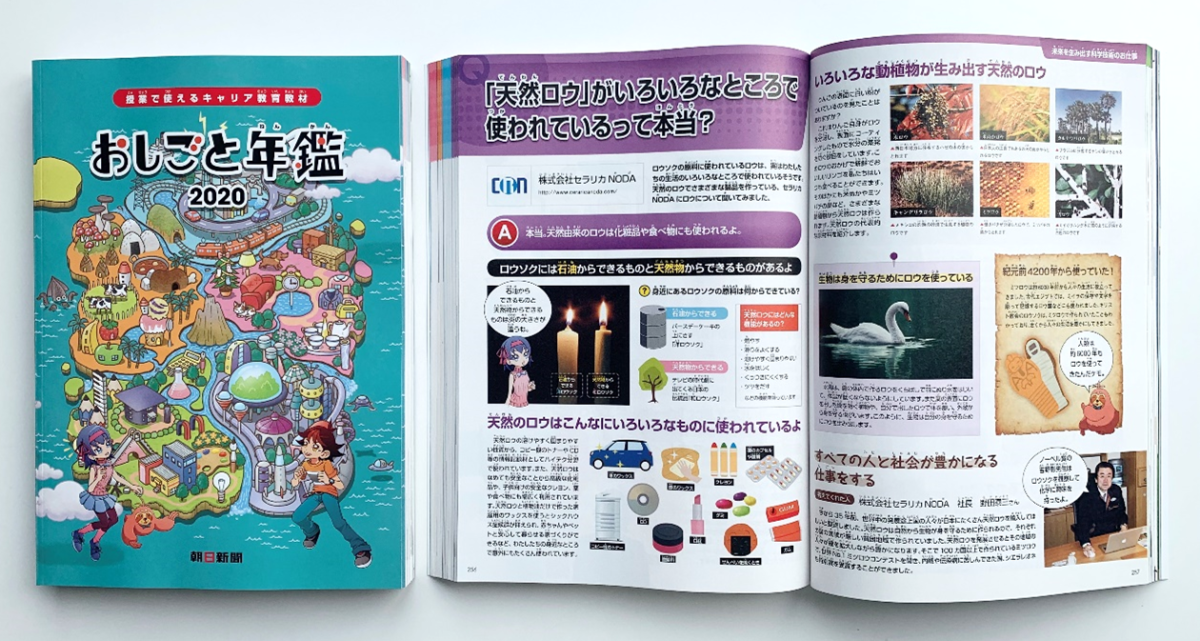
The "Job Yearbook" is a very unique educational material edited by the Asahi Shimbun Company, which clearly introduces the unique jobs of various leading companies and organizations in Japan. In July of this year, it was distributed to all elementary and junior high schools nationwide, as well as some high schools.
Our company introduces the "unexpected uses and functions of natural wax," which are not well known to children, in the "Job Yearbook." ("Job Yearbook 2020," pp. 256-257, p. 333)
For example, what comes to mind when you hear the word wax? I'm sure many people think of the candles on a cake. Of that wax, the kind mainly produced by plants and insects is called "natural wax."
"Natural wax" is used in a variety of ways, often unnoticed, around us. Besides being used in hair pomade for topknots and the traditional Japanese candles seen in historical dramas on television, it's also used as a raw material in cosmetics such as hair wax and lipstick, capsules and tablets for health foods, gummies, gum, dumplings and rice crackers, and even in information recording materials such as CDs and copier toner.
With the development of convenience stores and online shopping, our interest in products has waned beyond their convenience, and we often fail to notice their true quality and value, such as what they are made from or how to handle them properly.
To use bamboo shoots as an example, nowadays supermarkets and convenience stores are filled with ready-to-eat packaged bamboo shoots, and I think many people buy them for convenience. However, not so long ago, people would buy bamboo shoots with the soil still attached and prepare them themselves. Only then could they truly appreciate the difference in taste and texture between real bamboo shoots and the processed ones sold in convenience stores, and realize the amount of effort that went into preparing them for consumption. In
this age of abundance of convenient things, I sincerely hope that this "Job Yearbook" will serve as an opportunity to learn about the essence of things around us, to take more interest in the things we eat and use without thinking, and to cherish each and every flower and weed blooming by the roadside that we previously overlooked. I hope that this sensitivity to nature and the natural world that people originally possessed will grow strong in children.
And with heartfelt hope that this era of natural product manufacturing, which is kind to people and the planet, will spread step by step to future generations of children around the world.

Categories
blog

There is no such thing as a weed

Realize the essence of things around you

Have you ever become interested in "weeds"?
Weeds refer to plants that reproduce naturally, and while some are not useless and have medicinal effects, there are also a variety of plants that are poisonous.
Did you know that Emperor Showa once said, ``There is no such thing as a weed?''
I learned this from the president of CERARICA University.
As the name suggests, Hiroshiba, the garden of the Emperor's throne, is a large garden, and grass seeds fly from all over the place, making it overgrown with a variety of weeds in the summer. One summer, shortly after the war, when the Emperor and Empress returned from their summer vacation, Lord ChamberlainJijuchoMr. Irie apologized and said, ``I'm truly sorry, but the weeds are overgrown and this is all that remains.I will clean it up someday.'' In response, Emperor Showa said, ``There is no such thing as a weed in the first place.Every plant has its own name and lives wherever it pleases. You mustn't clean it,'' he said, conveying a deep meaning.
Even the plants we call "weeds" have their own names, and even the "language of flowers". The hated "weeds", which have vitality and keep growing no matter how much you pull them out, not only make us feel the four seasons, but also each one has a name, is created in this world, and absorbs carbon dioxide. They emit oxygen, purify water, and support the beauty of the entire planet.
Why don't you pay attention to the tiny lives with the Japanese's innate ``heart of awareness''?
<References> ●Aimasa Irie, “The Tale of the Imperial Chamberlain”/Published in 1980

Learn more about grass

Here, we will introduce each type of grass that you often see on the roads.

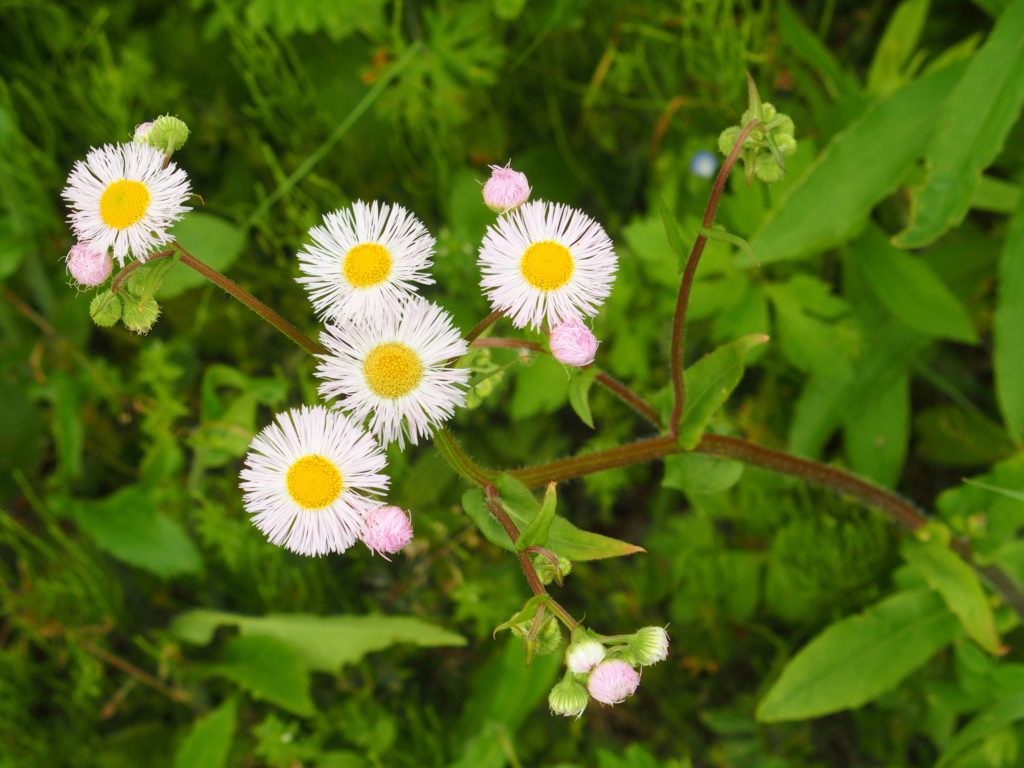
Halzion

This perennial herb belongs to the genus Erigeron in the Asteraceae family.
It's also called "poverty grass" due to a legend that picking or breaking its flowers will bring poverty. It
thrives in nitrogen-rich areas such as pastures and fields, and can be enjoyed in dishes like tempura or blanched greens. Flower meaning: "Reminiscing love"

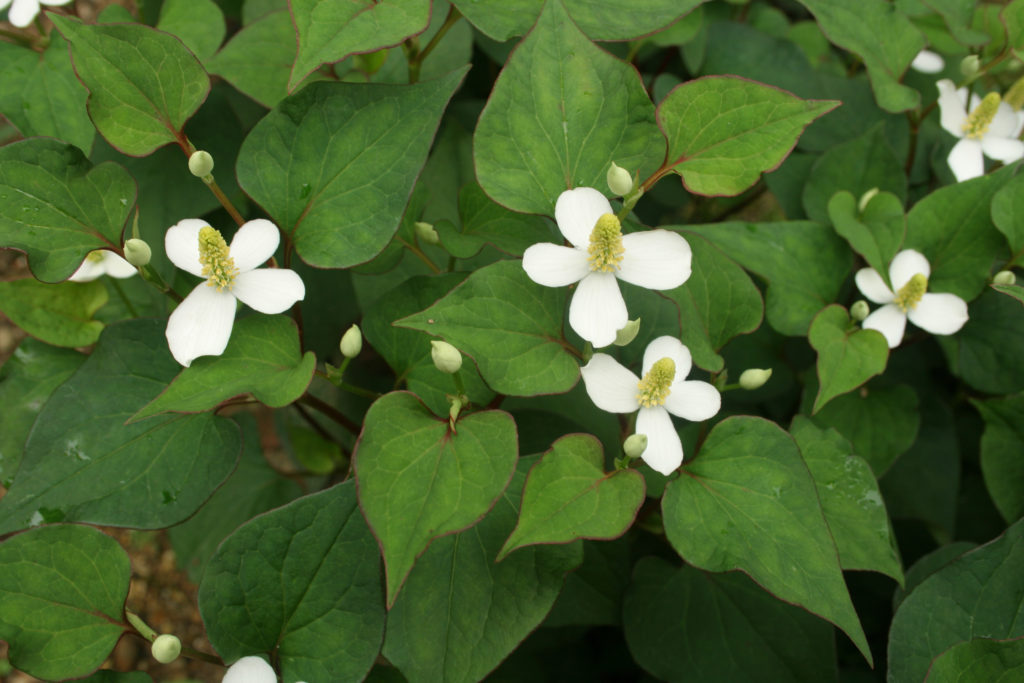
Houttuynia cordata
(also known as Dokudame, Juuyaku, Gyoseisou, Jigokusoba, Umazeri)

A perennial herb belonging to the Houttuynia genus of the Saururaceae family.
It grows in clusters in damp, shady places, has a distinctive fragrance, and has been widely used as a folk medicine since ancient times.
Flower meaning: "Wildness," "White memories."
Efficacy: Detoxification, fever reduction, prevention of arteriosclerosis, diuretic effect.

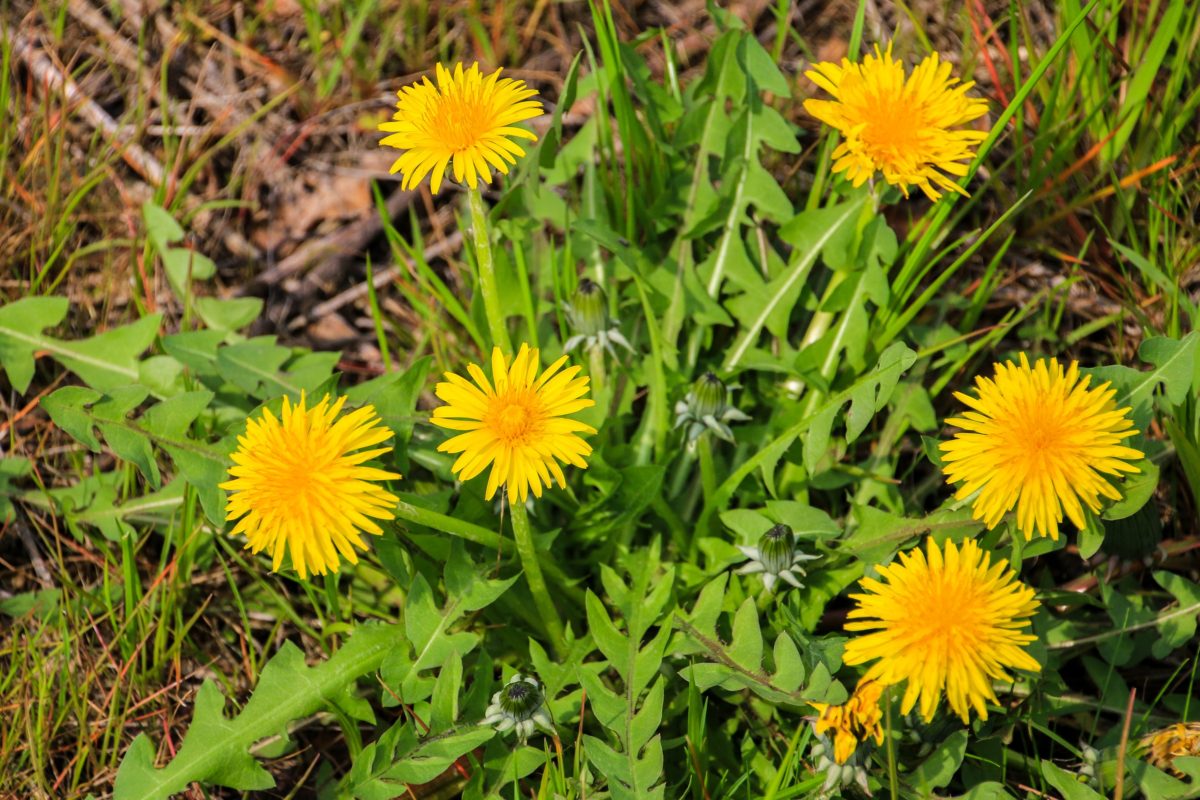
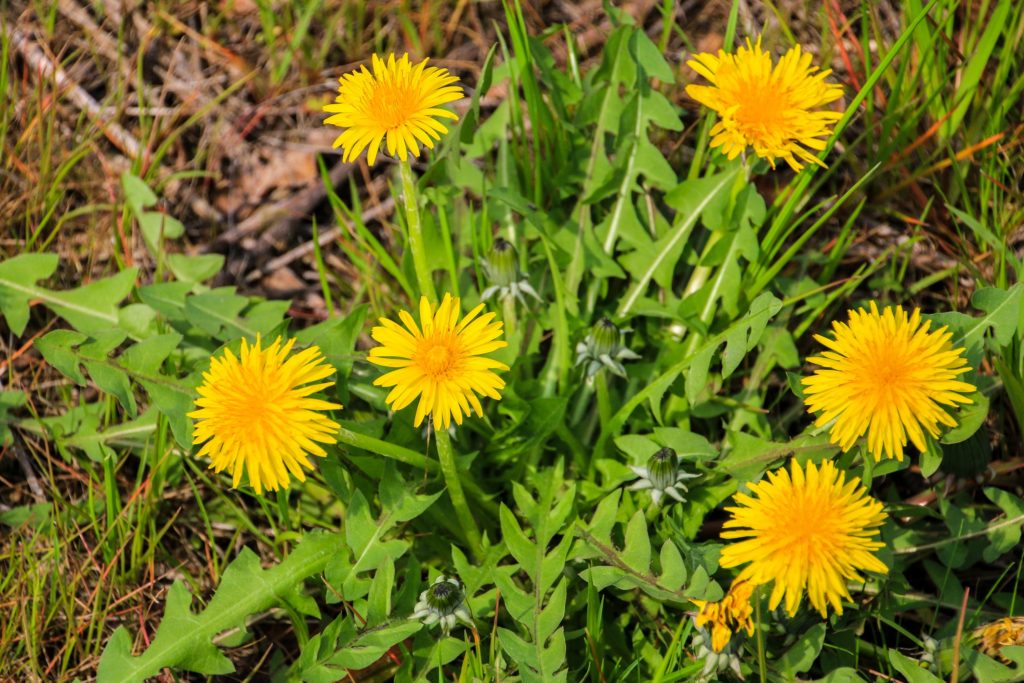
dandelion

This is a general term for plants belonging to the genus Taraxacum in the Asteraceae family.
The dandelions commonly seen in Japan include the native Japanese dandelion (Taraxacum platycarpum), which has grown wild since ancient times, and the Western dandelion (Taraxacum platycarpum), which was introduced from abroad after the Meiji era. The Japanese dandelion blooms only in spring, while the Western dandelion can be seen year-round, especially in urban areas.
Flower meanings: "Oracle of love," "Sincere love," "Separation."

Categories
blog

Let's spread the appeal of Japanese tea to the younger generation

Japanese tea is a very delicate drink

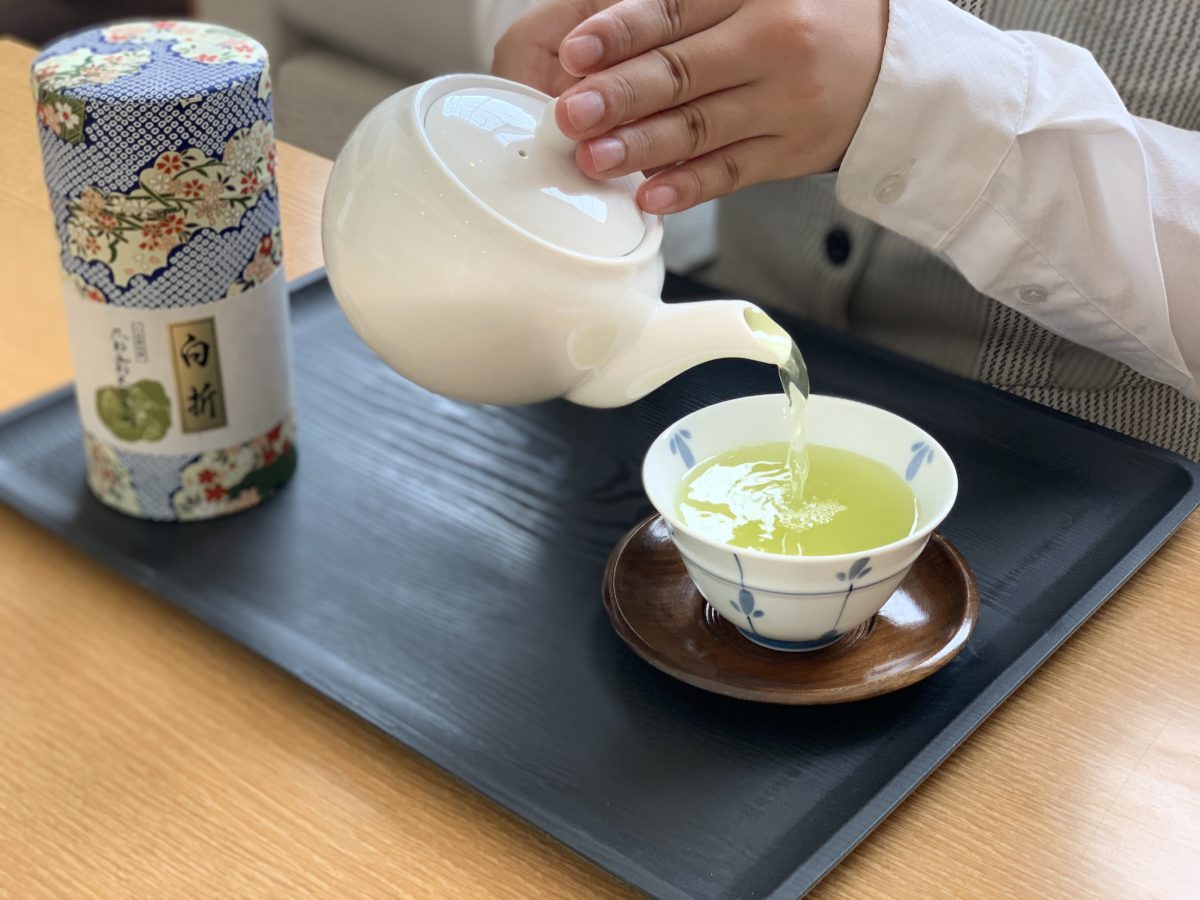
Tea is a familiar beverage for us Japanese people, with a very long history. Our company was founded in Yame City, Fukuoka Prefecture, and our Yame tea is a nationally renowned brand. There are many kinds of tea that are close to us, such as bottled tea, loose leaf tea, and tea bags, but at home, we probably use bottled tea more often than loose leaf tea that is brewed slowly in a teapot.
Have you noticed that Japanese tea originally requires a very delicate sensibility?
The reason why Japanese tea is said to be delicate lies not only in the brewing method, but also in the way the tea leaves are grown and the manufacturing techniques. The taste of Japanese tea differs depending on the temperature of the water used when brewing, and the inherent richness and aroma of the tea leaves are brought out by the skillful technique of the brewer, and the drinker cultivates and enjoys a sophisticated sense of taste that sometimes distinguishes between different flavors. Another delicate aspect is the high level of tea-making technique, which is not simply drying, but "drying while maintaining body temperature (34-35℃) over time, adjusting the kneading method as needed," and this is a traditional Japanese technique that can be proudly presented to the world.
Sharing a warm space with everyone when drinking tea is the origin of Japanese hospitality. Now 21 years old, I've recently discovered the subtlety and depth of tea, and as someone who serves tea to customers, I frequently visit tea shops to learn about the best ways to brew tea and the strengths of tea leaves from different regions, so that I can always provide my customers with the best possible experience.
If any of you are thinking, "Come to think of it, I haven't had a fragrant, full-bodied tea lately," why not stop by your local tea shop, choose your favorite tea, brew it from loose leaves at the perfect temperature, enjoy the richness of tea, and take a moment to relax?

<References/URLs>
Ochaukeya HP
https://ochaukeya.com/japanesetea/japanesetea-04

Categories
blog

Taking on the world from the first step

A door to the world of "language"

,CERARICAeach and every employee is studying English as a first step towards continuous improvement and aiming for the world from a young age.
By mastering English, we hope to communicate directly with people from all over the world who have different cultures, receive various inspirations, get to know and respect others deeply, and create new things by exchanging ideas.
For example, we might personally visit the overseas production sites of Life Wax =CERARICA, first to make friends, first to see the raw materials with our own eyes, and then contribute to improving the living conditions and alleviating poverty for the people living there through technical guidance, or to conduct detailed technical negotiations in English with top-class cosmetics companies overseas.
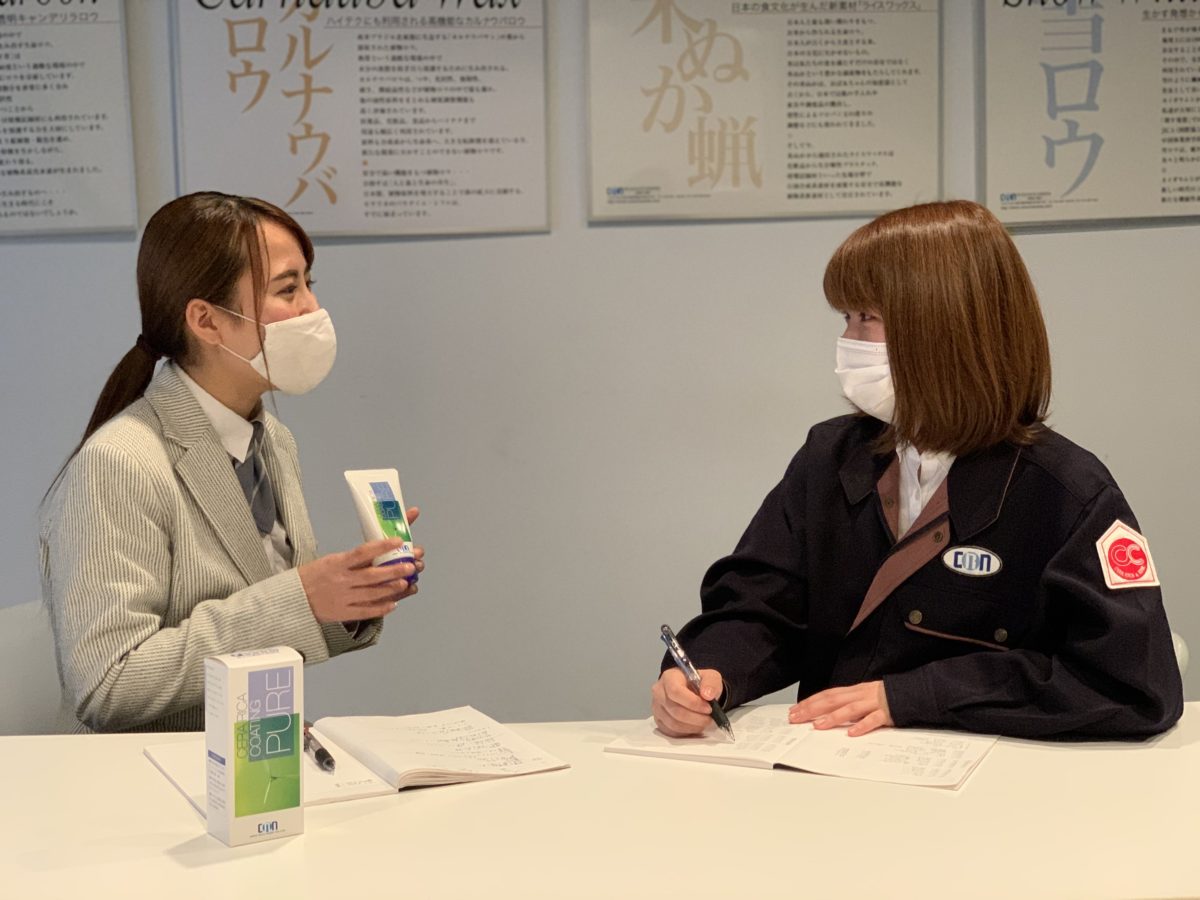
In our in-house training, under the guidance of Mr. Shan Kasem, a pure young man of British nationality from Sri Lanka who loves soccer, we practice the basics of introducing ourselves, the company, and our work in English, practicing together in a fun way, even if it's a bit hesitant and embarrassing at times.
We atCERARICANODA are committed to realizing the 21st-century "production industry" predicted by management scholar Drucker, by creating high-quality life wax =CERARICA. It will be a long journey, but we will leverage our improved language, cultural, and communication skills to advance this goal.