


Categories
blog

We provide some bright topics for those who are feeling a bit down due to the coronavirus

A female traditional craftsman that Japan can be proud of

Tamae Ueda, a female traditional craftswoman featured on this website, won both the top prizes at the annual Tokyo Hand-Painted Yuzen Dyeing Competition and Exhibition, the "Somegei-ten," despite the challenges posed by the coronavirus pandemic, which resulted in a half-day event for invited guests only. Despite these difficulties,
Ms. Ueda carefully listens to the thoughts and feelings of her clients, and then wholeheartedly dedicates herself to creating works that fully incorporate those feelings.
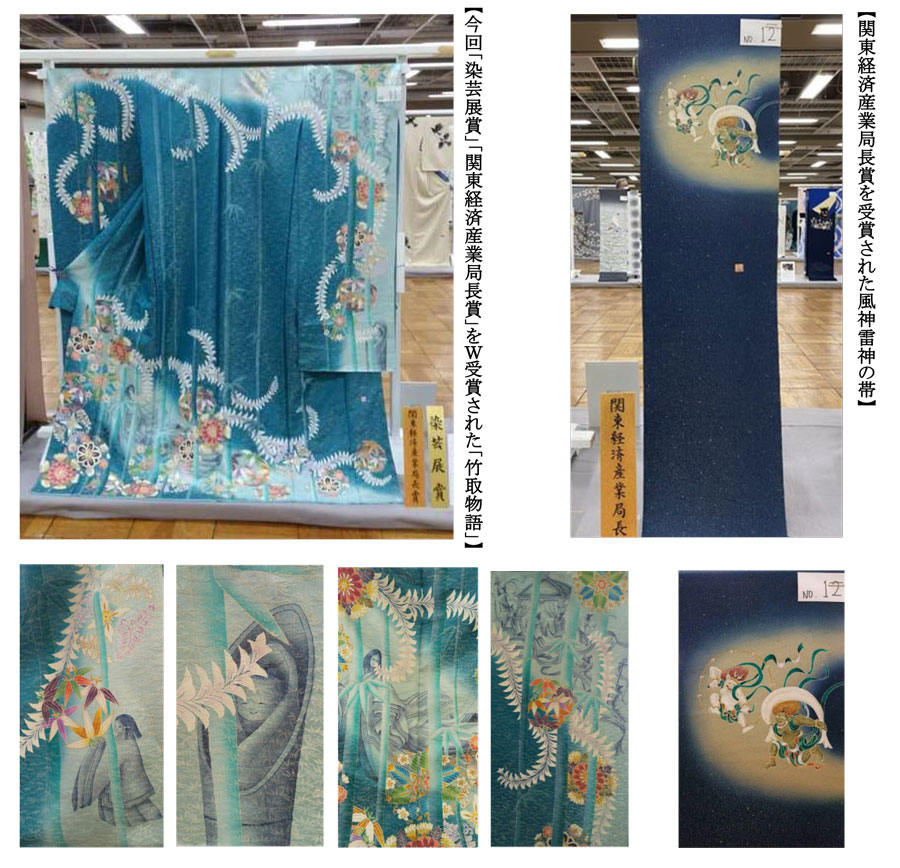
In parallel with this, for the KIMONO PROJECT, a major project to create furisode (long-sleeved kimono) inspired by 196 countries and regions around the world in preparation for the 2020 Tokyo Olympic and Paralympic Games, she created a wonderful furisode kimono that embodies a strong desire for peace, with thoughts directed towards the people of Afghanistan, the country suffering the most from war in the world
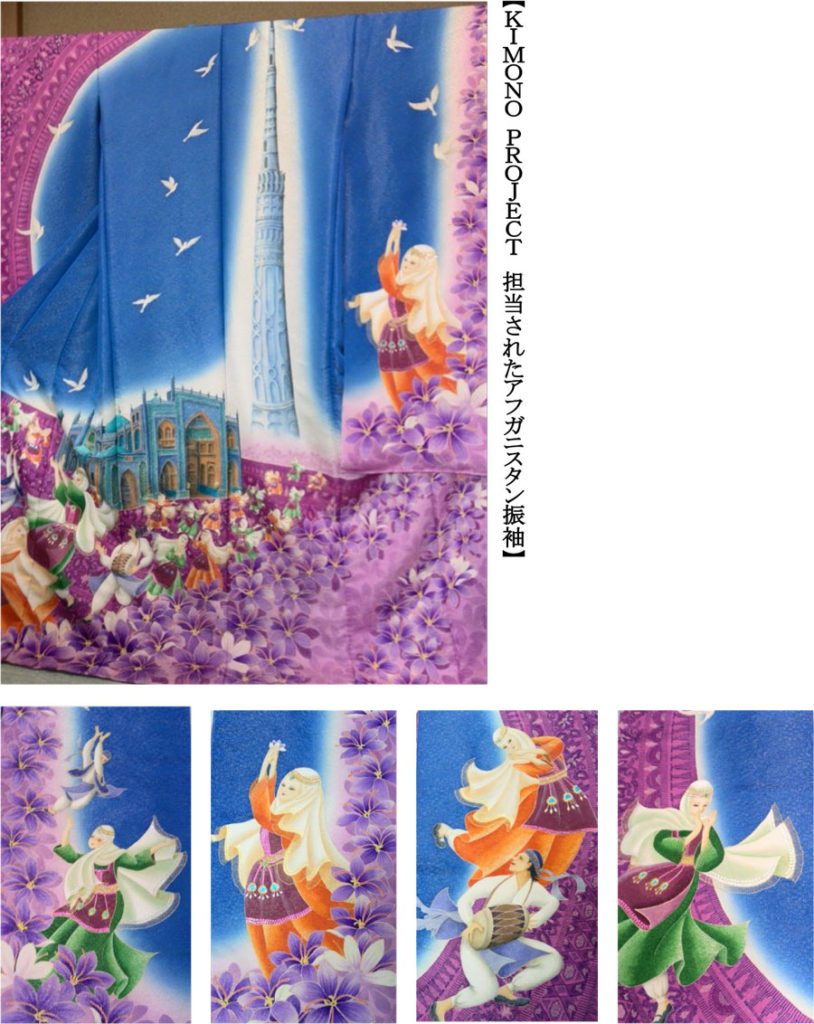
The video of the unveiling ceremony for the 100-country  project, featuring Tamae Ueda's work,
starts at 3 minutes and 48 seconds. In today's world, only flashy things get talked about, but "compassion" and "warmth" are always understated. The feelings that Ms. Ueda poured into each of her works brighten our spirits, just like when we put on a brightly colored kimono. Seeing Ms. Ueda like that, I strongly felt that God is indeed "watching over her."
Categories
blog

Unexpected uses for wax

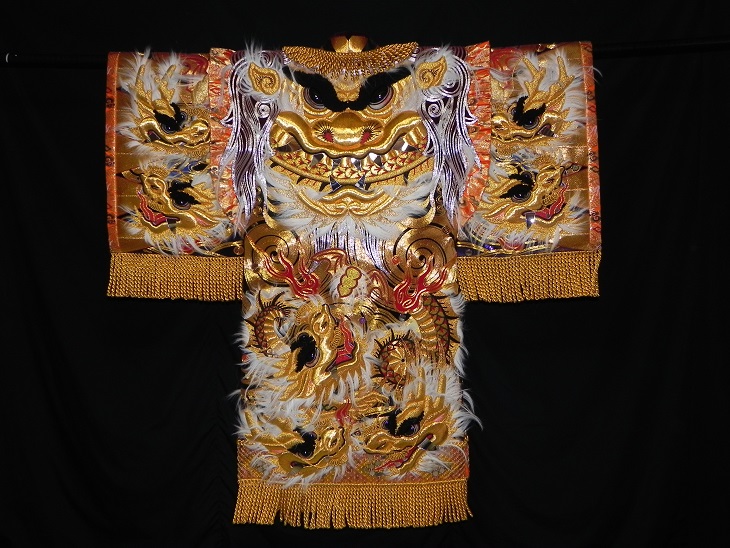
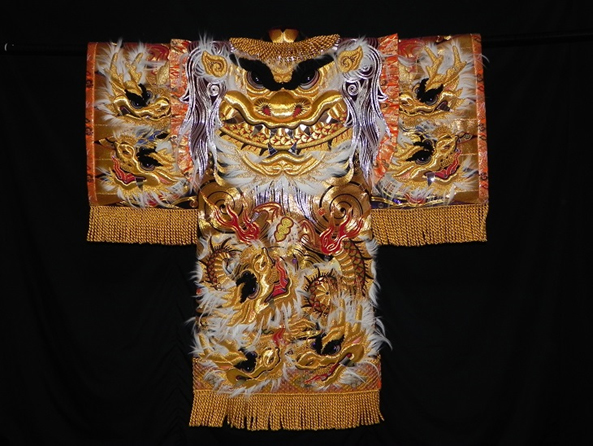
We would like to introduce Sadomura Costume Shop, a specialist in Kagura costumes and gold embroidery.
These are works by Sadomura Costume Shop, which supports Iwami Kagura, a traditional performing art of western Shimane Prefecture.
Iwami Kagura is a traditional performing art where dances are performed to the lively sounds of drums and flutes. Highlights include the extremely elegant costumes and masks, and the snake bodies larger than human bodies, which move across the stage sometimes quietly, sometimes powerfully, captivating the audience.
(Susumu Nomura, who has written non-fiction works such as "We've Worked for a Thousand Years," which created the boom in long-lived companies in Japan, and has won various awards including the Soichi Oya Non-Fiction Award, is currently focusing on Iwami Kagura and writing a series of articles for Shinchosha's magazine "Nami.")

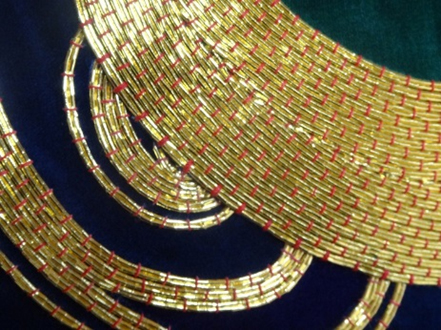
The photo above is a work by Sadomura Costume Shop. The three-dimensional creature embroidery made with gold thread shows various expressions depending on the angle, captivating the viewer. The costumes are powerful yet elegant, and seem to have been breathed life into them

Now, our company deals with wax.
Can you tell us where our products and waxes are used?

Let's take a closer look at this costume

Did you understand?
This red thread, used to sew the gold thread onto the fabric, is where our wax comes into play.
When sewing the gold thread onto the fabric with the red thread, the friction of the red thread can damage the gold thread and diminish its shine. Therefore, by applying wax to the red thread, it becomes slippery, making it less likely for the red thread to scratch the gold thread when it comes into contact with it, allowing it to continue to shine. When you think about how such incredibly meticulous work is carried out over such a wide area, you are deeply moved by the passion and dedication of the craftsmen who support this tradition.
We hope that Sado Village Costume Shop will continue to pass on the traditional performing art of Iwami Kagura to future generations and support Japanese culture.

Categories
blog

At CERARICA NODA, we support "traditional techniques that make use of nature."


We will introduce the works of Group Takumi, a group of female traditional craftspeople who have inherited traditional techniques and are producing wonderfully creative works

Works by the group of female traditional craftspeople "Group Takumi"

Currently, there are approximately 210 regions in Japan designated by the government as production areas for traditional crafts, and there are about 4,600 nationally certified "Traditional Craftspeople" who have inherited these crafts. Of these, more than 560 are women. Among them is "Group Takumi," a group of 12 female traditional craftspeople who
share the aspiration to "spread the wonder of traditional crafts to the world" and "bring joy to many people and make the world a better place." This
group of female traditional craftspeople is striving to create new value in the production of traditional crafts, without being bound by conventional techniques.
For example, there is Tamae Ueda, a traditional craftsperson of Tokyo hand-painted Yuzen.
We will introduce Ms. Ueda's work on hand-painted Yuzen. Normally, when drawing patterns on cloth, petroleum-based paraffin wax is used to draw the patterns. After dyeing the cloth with dye, the petroleum-based wax is removed, leaving the areas drawn with wax white. (Batik dyeing)
After hearing about Ms. Ueda's work, our company president (Taizo Noda)CERARICAprovided her with
Ms. Ueda replaced petroleum-based paraffin wax with our productCERARICAcoating and used it to create Tokyo hand-painted Yuzen.
Ms. UedaCERARICAabout her experience usingCERARICAshe shared an interesting observation:
Upon further inquiry, she explained, "When patterns are drawn with paraffin, the heat generated to melt the paraffin can cause the batik-dyed areas to turn yellow. Also, when removing it after dyeing, solvents are used, raising health concerns." On the other hand, when using our product, she was impressed that "the batik-dyed areas were less prone to discoloration, and she was able to draw the design vividly."
They also mentioned that "when using paraffin wax, hands become rough and damaged after working, butCERARICAcoating is gentle on the skin, leaving hands smooth after use."
I am deeply impressed by their strong will and unexpectedly innovative efforts, as they continue to think for themselves and pursue the discovery of new techniques and attractions, without being bound by conventional methods.

Tokyo Hand-painted Yuzen Traditional Craftsman, Ueda Tamako's Work


Works by Taeko Aoki, a traditional craftsman at the Imari and Nabeshima ware kiln "Kosengama"

Hakata Dolls - Works by traditional craftsman Akiko Inoue