




history of technology
A history of technology that challenges nature
1920 (Taisho 9)
Their main product, Japan wax, was a representative export item of natural products before the war and reached its peak.
With three factories in Yame City, it became a modern industry representing Yame City at the time.
With three factories in Yame City, it became a modern industry representing Yame City at the time.
1963 (Showa 38)
We are diversifying our use of natural products and have entered the food industry.
We have applied our wax deodorization technology to establish a high-quality garlic oil manufacturing plant in Karatsu City, Saga Prefecture.
We are exporting our products to Europe in cooperation with Takasago International Corporation, and we are also developing safe and reliable feed additives.
We have applied our wax deodorization technology to establish a high-quality garlic oil manufacturing plant in Karatsu City, Saga Prefecture.
We are exporting our products to Europe in cooperation with Takasago International Corporation, and we are also developing safe and reliable feed additives.
1970 (Showa 45)
The company relocated its headquarters and factory to a new location in the inland industrial park in Aikawa-cho, Aiko-gun, Kanagawa Prefecture (a town of overlapping love). The company
has developed into a comprehensive manufacturer of animal and plant wax refinements.
has developed into a comprehensive manufacturer of animal and plant wax refinements.
1974 (Showa 49)
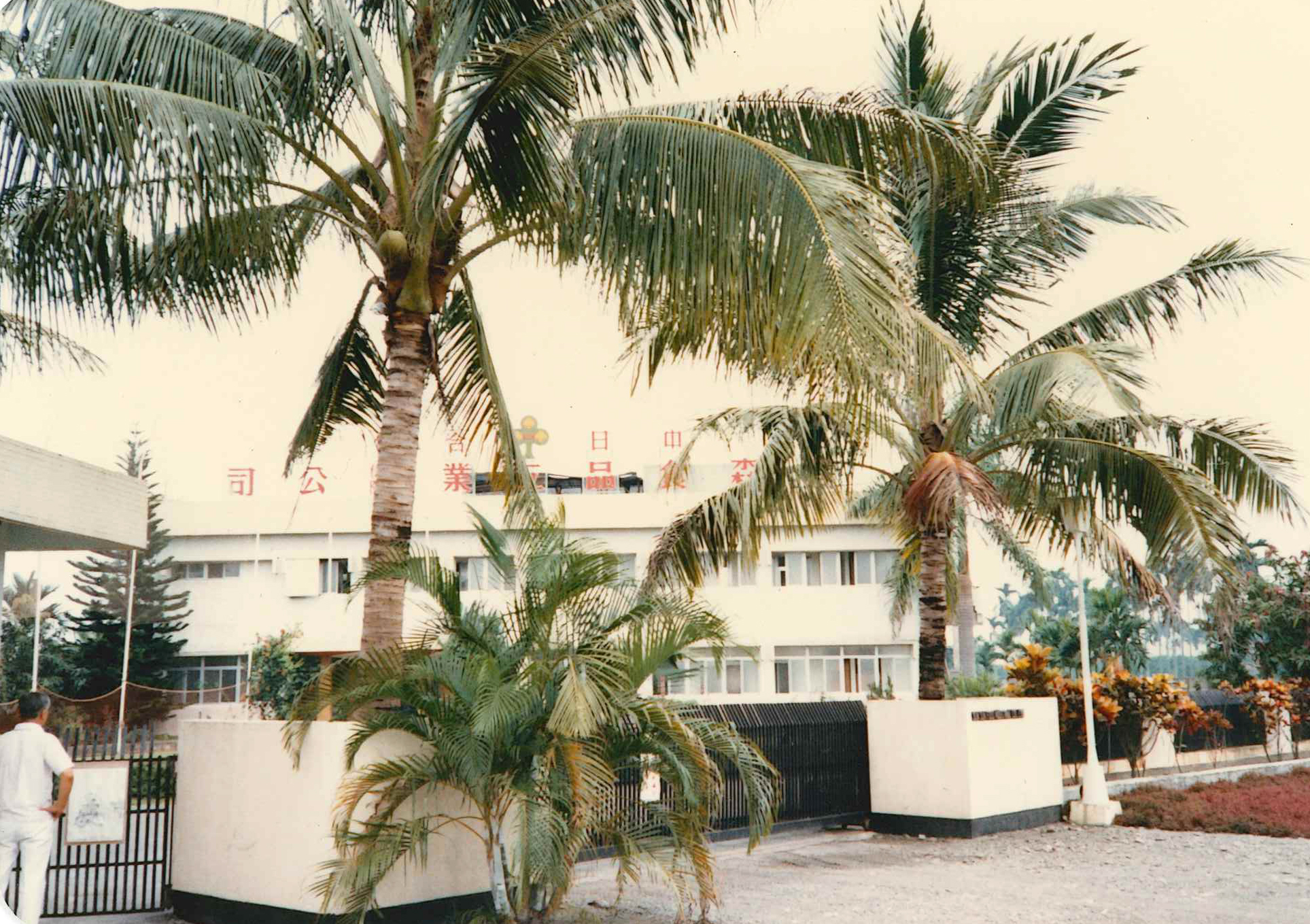
Morimori Foods Industry, a vegetable extract processed food company, was established in Pingtung County in southern Taiwan, based on the "altruistic philosophy" of the Noda family motto, which aims to utilize unused resources such as non-standard onions that farmers have difficulty disposing of, and to become prosperous together with local farmers
1980 (Showa 60)
Entered the biotechnology field. Started research and development of ultra-early cancer diagnostic drugs.
Succeeded in developing new uses for Japan wax in the high-tech field
Leading information equipment manufacturers are increasingly adopting it as a material for information recording media such as compact discs, copier toner, and thermal paper for fax machines.
Succeeded in developing new uses for Japan wax in the high-tech field
Leading information equipment manufacturers are increasingly adopting it as a material for information recording media such as compact discs, copier toner, and thermal paper for fax machines.
1985
He began manufacturing and selling vacuum fried foods. His method was adopted for Nissin Foods Cup Noodles, among others.
He participated in the Japan External Trade Organization (JETRO) project to promote the import of animal and plant waxes. He
then visited China, Mexico, Cuba, Brazil, and other countries where animal and plant waxes are produced.
He realized that various governments are strongly supporting the production of animal and plant waxes, believing that it is useful for helping developing countries escape poverty.
He participated in the Japan External Trade Organization (JETRO) project to promote the import of animal and plant waxes. He
then visited China, Mexico, Cuba, Brazil, and other countries where animal and plant waxes are produced.
He realized that various governments are strongly supporting the production of animal and plant waxes, believing that it is useful for helping developing countries escape poverty.
1991
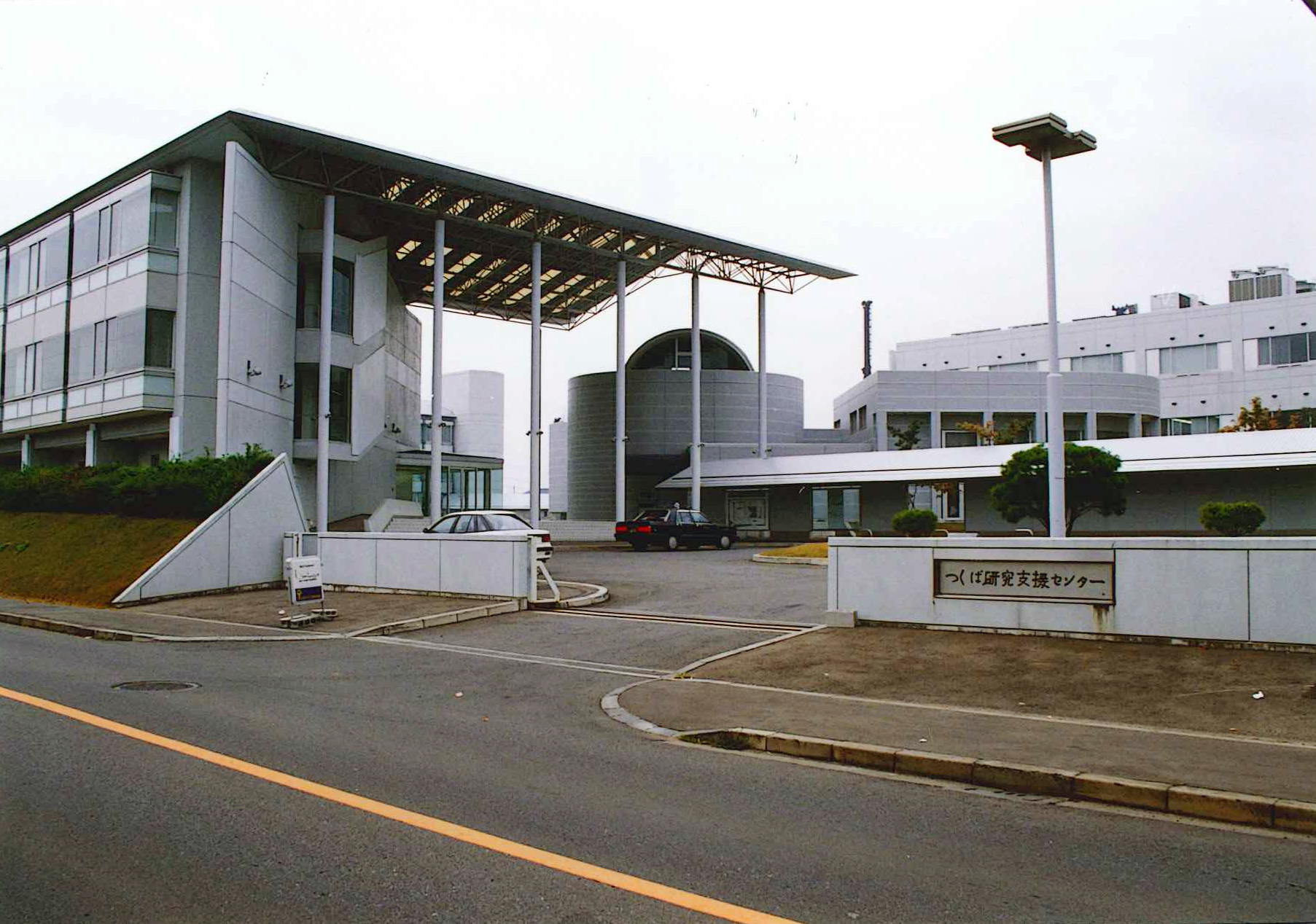
The Tsukuba CERARICA Center was opened in Tsukuba Science City.
Participation in the Ministry of Agriculture, Forestry and Fisheries' next-generation large-scale project, the "Insect Industrial Use Project," was considered. Research into utilizing insects, which had previously been largely ignored, was initiated.
Participation in the Ministry of Agriculture, Forestry and Fisheries' next-generation large-scale project, the "Insect Industrial Use Project," was considered. Research into utilizing insects, which had previously been largely ignored, was initiated.
1993
Japan wax and increase imports, under the direct orders of Xu Youfang, Minister of Forestry of the Chinese Ministry of Forestry, the company promotes the planting of wax trees in the mountains of Fujian Province.
The company also participates in the Ministry of Agriculture, Forestry and Fisheries' Insect Utilization Industrial Technology Development Project, and begins research on the idea of "making use of" insects. This research continues for the next 10 years.
The company also participates in the Ministry of Agriculture, Forestry and Fisheries' Insect Utilization Industrial Technology Development Project, and begins research on the idea of "making use of" insects. This research continues for the next 10 years.
1994
The Beijing Representative Office was opened in the main building of the Friendship Hotel in Beijing, China, with the aim of conducting a nationwide survey of animal and plant wax raw materials.
The first international private research contract was concluded with the China Academy of Forestry, resulting in a Japan-China joint research development agreement on "Squamous Scale Insect Snow Wax."
The first international private research contract was concluded with the China Academy of Forestry, resulting in a Japan-China joint research development agreement on "Squamous Scale Insect Snow Wax."
1996
The "Natural Wax Development Test Project in China," an extremely rare undertaking at the small-to-medium-sized enterprise level, was selected as a development loan project by the Japan International Cooperation Agency (JICA).
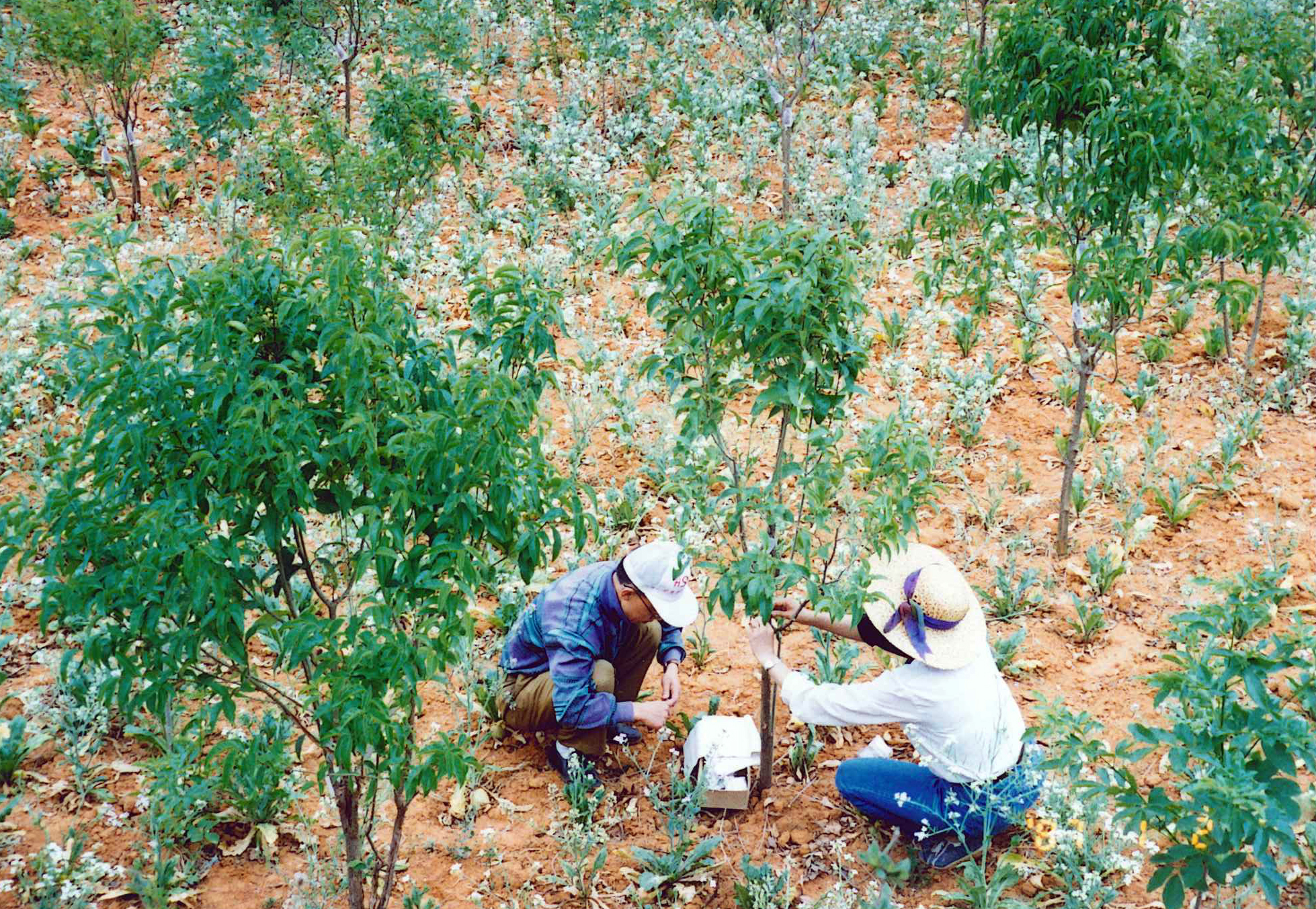
The company established its own capital, Xinleli Connerda Biotechnology Co., Ltd. in Beijing to manufacture "snow wax" from the secretions of scale insects. It operates as a local research refinery. At the same time, the company planted glutinous and privet trees in Yunnan and Sichuan provinces with the aim of producing snow wax. The company
was selected as a panelist at the United Nations University "Zero Emissions" Publication Commemorative Forum (attended by UNU Rector De Souza, proponents F. Kappler and G. Pauli), where it proposed a "biological industry" using insects to produce biowax, or CERARICA . The project attracted attention as an essentially zero-emissions project.
The company established its own capital, Xinleli Connerda Biotechnology Co., Ltd. in Beijing to manufacture "snow wax" from the secretions of scale insects. It operates as a local research refinery. At the same time, the company planted glutinous and privet trees in Yunnan and Sichuan provinces with the aim of producing snow wax. The company
was selected as a panelist at the United Nations University "Zero Emissions" Publication Commemorative Forum (attended by UNU Rector De Souza, proponents F. Kappler and G. Pauli), where it proposed a "biological industry" using insects to produce biowax, or CERARICA . The project attracted attention as an essentially zero-emissions project.
1997
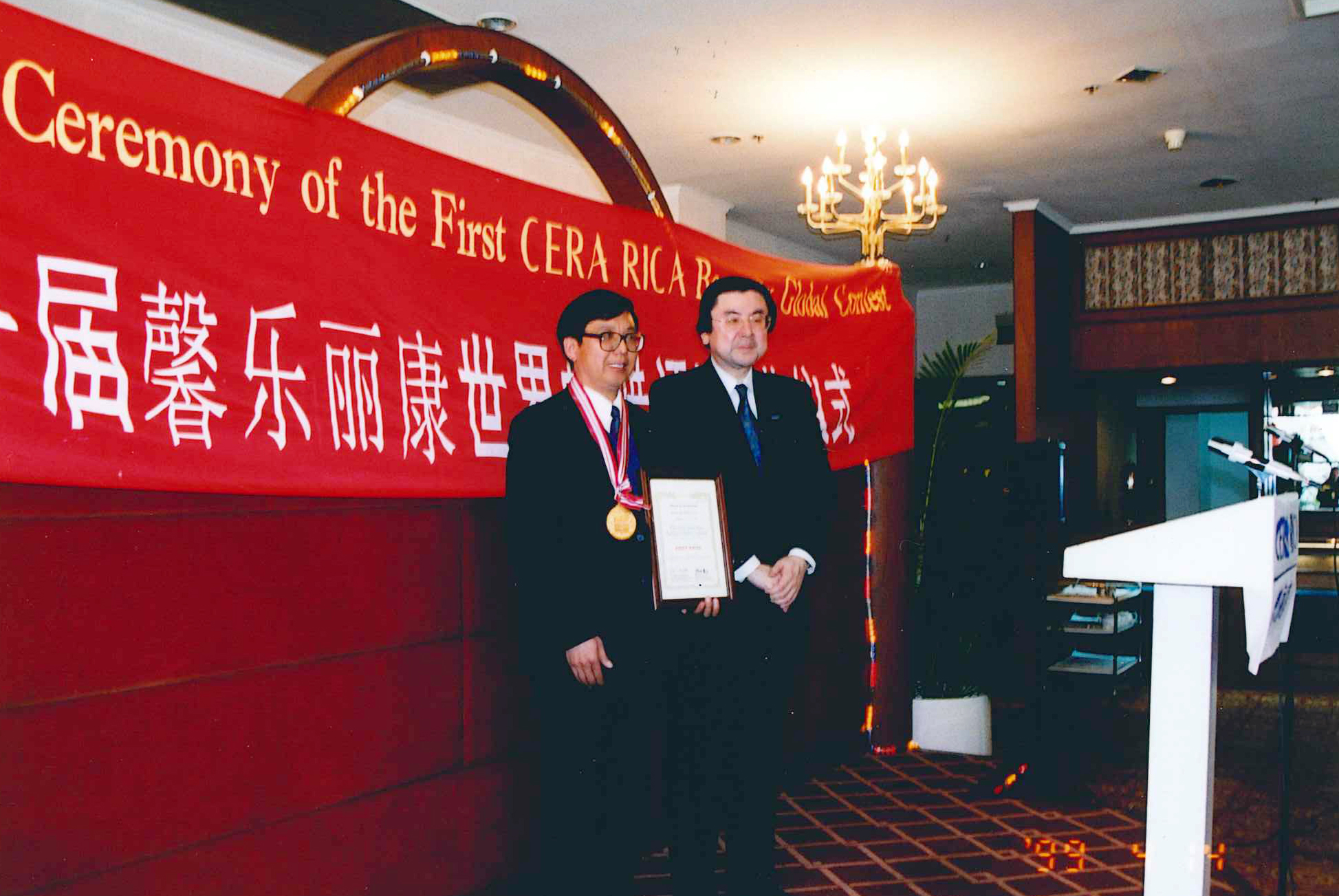
Received the Nikkan Kogyo Shimbun's 14th International Contribution Award for his work in creating jobs and expanding forests in China. The award was given because a series of joint Japan-China projects were development loan projects from the Japan International Cooperation Agency (JICA).
He has obtained numerous patents for "ultra-early cancer diagnostic drugs using oncogenic gene products.
" His "Insect Secretion Wax Utilization Development Project" was recognized by the Kanagawa Prefectural Governor as a creative business activity.
He has obtained numerous patents for "ultra-early cancer diagnostic drugs using oncogenic gene products.
" His "Insect Secretion Wax Utilization Development Project" was recognized by the Kanagawa Prefectural Governor as a creative business activity.
1998
Research and development begins on the revolutionary " CERARICA Coating," made from 100% food-grade plant ingredients that overturns conventional wisdom about paints
1999
Shiseido AYURA launched the revolutionary "Soot-Free Aroma Candle," a candle made with "Snow Wax," which solved the biggest problem in the candle industry: the soot problem. International patents were obtained.
CERARICA , a first in the history of international beekeeping, for beeswax that had previously received little attention .
CERARICA , a first in the history of international beekeeping, for beeswax that had previously received little attention .
2000
After two years of development and 300 prototypes, the 100% plant-based " CERARICA Coating Plant Power" was completed.
At the same time, it was the first paint to receive the "Good Design Award (New Area Category)" along with NTT Docomo's i-mode.
At the same time, it was the first paint to receive the "Good Design Award (New Area Category)" along with NTT Docomo's i-mode.
2002
" CERARICA Coating Pure" is
being adopted by cutting-edge construction companies in terms of health and safety, such as Kobayashi Housing Industry and Aoki Construction. It has obtained numerous international patents.
being adopted by cutting-edge construction companies in terms of health and safety, such as Kobayashi Housing Industry and Aoki Construction. It has obtained numerous international patents.
2003
" CERARICA Coating Pure"
becomes the first oil-based and natural paint to be certified "F☆☆☆☆" by the Minister of Land, Infrastructure, Transport and Tourism.
CERARICA Coating Pure" is adopted for Nice's luxury furniture "BEMUKU."
It is also adopted for YKKap's top-quality door wax.
becomes the first oil-based and natural paint to be certified "F☆☆☆☆" by the Minister of Land, Infrastructure, Transport and Tourism.
CERARICA Coating Pure" is adopted for Nice's luxury furniture "BEMUKU."
It is also adopted for YKKap's top-quality door wax.
2007
" CERARICA Coating Pure" is certified as the "2nd Kanagawa Standard" as a technology originating in Kanagawa that can be shared with the world.
It is adopted by Sekisui House and Chiba University's Chemiless Town as a wax for people with chemical sensitivity.
It is adopted by Sekisui House and Chiba University's Chemiless Town as a wax for people with chemical sensitivity.
2010
Obtained ISO14001 environmental management system certification on December 1, 2010.
Launched the NC-F series, which contains approximately 300 types of pesticide-free wax (non-detectable).
Pesticide-free beeswax is adopted by Saishunkan Pharmaceutical.
Launched the NC-F series, which contains approximately 300 types of pesticide-free wax (non-detectable).
Pesticide-free beeswax is adopted by Saishunkan Pharmaceutical.
2011
The Great East Japan Earthquake led to the denial of modern civilization. The Minister of Health, Labour and Welfare granted permission for the continued use of sugarcane wax as a food additive
2013
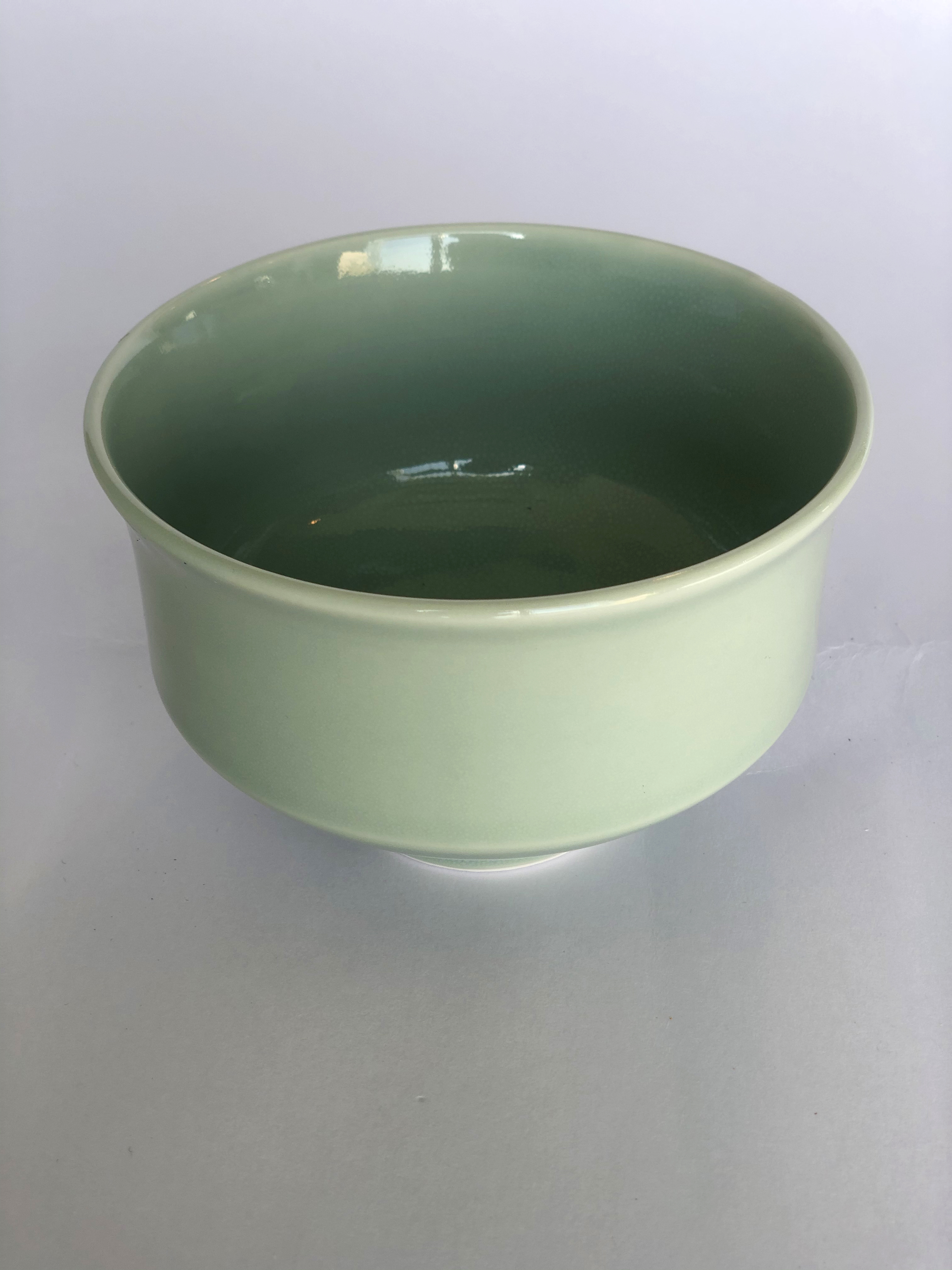
The Kita Seiwasho in Ozu City, Ehime Prefecture, has been rebuilt and reopened as the "Tsurukame Kita Factory." Japan's oldest "eco-friendly working boiler" is now operational again, and together with Japan's oldest movable bridge, "Akabashi Bridge," it has become a symbol of the local Nagahama area. Rather than relying on petroleum, the boiler is powered by biomass fuel, made from the waste extracted from hazelnuts and twigs taken together during harvesting. The ash from the hazelnuts that is finally discharged has been reused as a new glaze in collaboration with a female traditional craftsperson from Kyushu, creating beautiful new colors for pottery
2015
Amidst a major shift in automobiles, we have been working with a global manufacturer to develop natural tire products, and by using natural wax instead of petroleum wax, we have discovered that this results in tires with the same high functionality as conventional tires and outstanding gloss. Utilizing the Japan Patent Office's small and medium-sized enterprise support system, we applied for a patent for this, primarily within our own company, and obtained the patent at the end of 2019 (Patent No. 6635367)
2019
With the support of the Kanagawa Institute of Invention and Innovation, we are now able to file our own domestic trademark application. As an alternative to petroleum-based microplastic beads, we have developed new, highly deodorized, fine powder products made from carnauba, candelilla, Japan wax , rice wax, etc. These can be used in a variety of applications, including as a texture additive for creams, scrubs, mascara, and foundations
2020
CERARICA product catalog has been completely revamped, and the first technical pamphlet, "Hardness Data with Various Oils," and the second, "Melting Point Data with Various Oils," have been published. Technical information is provided to meet customer needs
2021
The third technical pamphlet, "Viscosity data with various oils," and the fourth, "Data on improving the plasticity of natural wax," have been published. Focusing on the characteristics of soft wax, the pamphlet has expanded the data that is useful for processing and compounding design.
2022
The fifth technical pamphlet, "Emulsification Data of Natural Waxes," was published, demonstrating emulsion stability in the skin care field and presenting new possibilities for natural waxes.
2023
At the cosmetics industry technology exhibition "CITE JAPAN 2023," we announced sugarcane-derived sugarcane wax and candelilla wax alternatives, promoting the shift to sustainable natural ingredients.
2024
We have begun full-scale research and development into environmentally friendly products. Based on the refining and processing technology we have cultivated over many years, we have developed new products that reduce environmental impact. We have improved candelilla wax substitutes and advanced the commercialization of highly deodorizing natural wax.
2025
The High Deodorizing Series was announced and launched at CITE JAPAN 2025. The company further improved its unique refining technology, significantly reducing the odors inherent in raw materials. This increased the flexibility of cosmetic formulations and helped customers solve their product development challenges.