




Last year, our company president wrote a book called "The US-China Trade War and a Breakthrough for the Japanese Economy." In Chapter 8, "The Experiences of Long-Lived Companies that Survived Historical Upheavals," on page 153, he recommended "The Survival Mechanisms of Long-Established Companies" by Sone Shuichi (Chuokeizaisha, March 28, 2019) as a must-read for anyone interested in the true nature of long-lived companies. This book, which he recommended as a must-read for anyone interested in the true nature of long-lived companies, enjoyed the remarkable feat of winning four major awards last year. We hope that the series of lectures at the Nikkan Kogyo Shimbun "100-Year Management Association" will also shed light on the true nature of Japanese-style management for the future, based on the perspectives of long-lived companies
The details of the awards are:
"Japan Regional Studies Association Book Award" (Japan Regional Studies Association);
"Japan Venture Association Kiyonari Tadao Award, Book Category" (Japan Venture Association);
"Family Business Association Academic Award" (Family Business Association);
and "Small and Medium Enterprise Research Encouragement Award, Management Category, Main Award" (General Incorporated Foundation, Research Institute of Commerce and Industry)
.
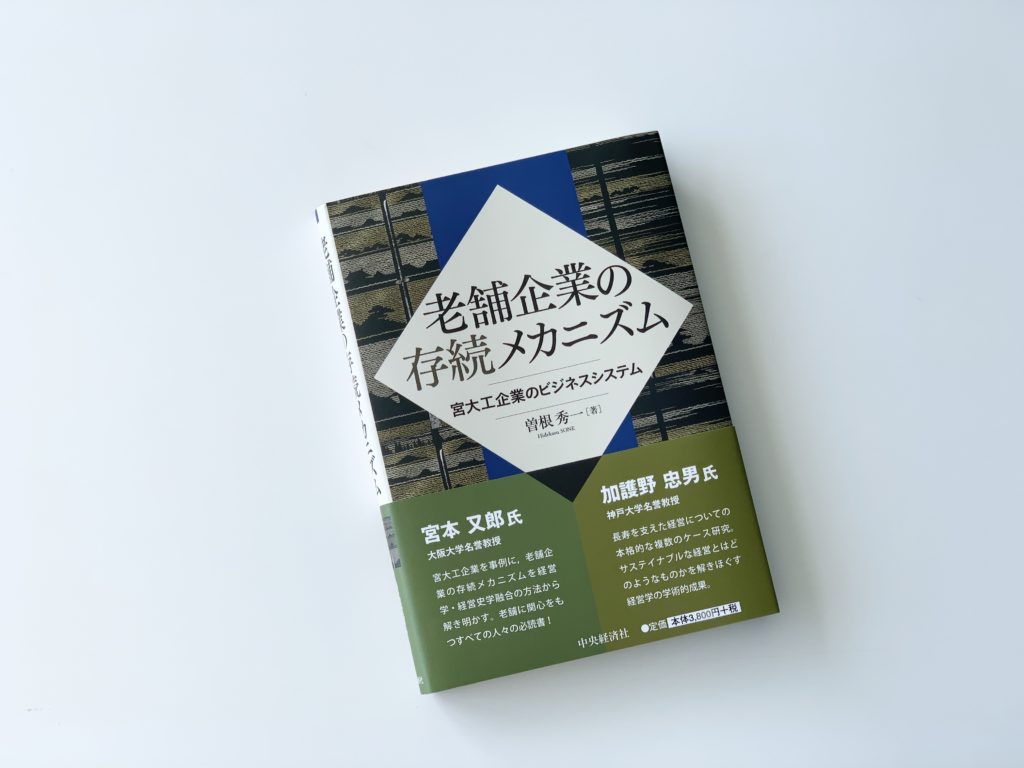
On the "Survival Mechanism of Long-Established Companies"
Focusing on extremely long-lived companies, including Kongo Gumi, the world's oldest company, the book denies common myths and reveals from a completely new perspective the mechanisms behind the survival and decline of long-established companies, explaining through in-depth interviews why they have been able to adapt to changing times and survive while preserving traditional skills
A message from our president
What I learned from reading this book is that "the 'good fortune' that is shown to the current management and future successors as a result of the 'good deeds' performed by generations of management seems to be the hidden key to a long-lived company, even from my own experience." I wish Professor Sone all the best in his future international endeavors