



CERARICA NODA's original SDGs story
"Towards the coexistence of people, forests, and life"
CERARICA NODA's journey began with a single phone call
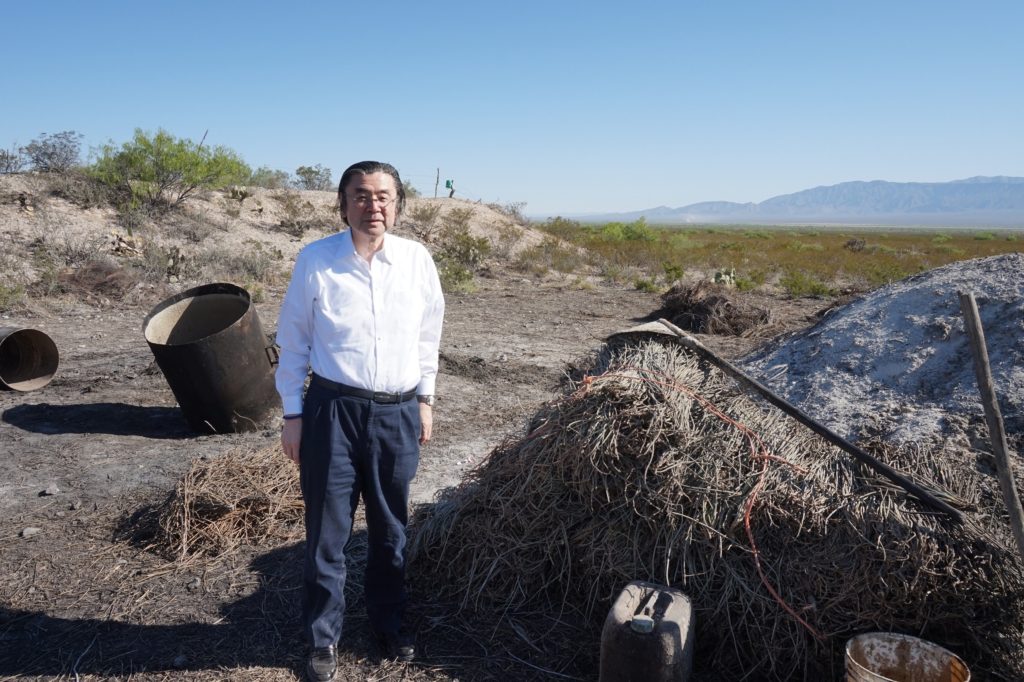
In the spring of 1985, I received a phone call from JETRO (Japan External Trade Organization) informing me that animal and plant waxes were one of the items that countries around the world most wanted Japan to import, and that they would be creating an "Access Series" of import promotion materials to accelerate imports to Japan, featuring animal and plant waxes. While participating in this project and working together to create the materials, I learned for the first time that many countries were eager to export "animal and plant waxes" to Japan. So I traveled to remote areas of China, Vietnam, Cuba, Mexico, Brazil, and other countries far from Japan to see for myself and deepen my understanding
Many of the places where " CERARICA " is produced are poor areas in developing countries with harsh climates. In keeping with the Noda family's traditional altruistic philosophy, CERARICA NODA has been actively working on raw material development projects for " CERARICA " in cooperation with various governments, with the theme of "achieving both economic and environmental improvement in poor areas around the world far from Japan" by utilizing nature to plant trees and raise insects
Since 1990, we have formulated the CERARICA Concept, a 21st century vision aimed at achieving "coexistence between people, forests, and life" for the world, and have been working to put it into practice
CERARICA NODA will further expand the " CERARICA Concept" not only in Japan but all over the world, aiming to revitalize villages and towns in areas that have been left behind and are suffering from poverty, as well as promote green economic development in developing countries. Please see below for a summary of activities that could be considered the origins of the SDGs, which aim to "create a sustainable, recycling-oriented society" appropriate for the 21st century and "make all people involved happy."
President and CEO of CERARICA NODA Co., Ltd

CERARICA NODA's original SDGs activities
◆ What is CERARICA concept?
What is true wealth?
◆Statement
◆Japan's initiative:
Japan waxRegional revitalization through
◆ " CERARICA Future Creation" Initiatives Overseas
・Vegetable extract factory opened in Taiwan
・China JICA Royal Wax Snow Wax Project
・Held a seminar on Life Law = CERARICA in Hanoi, Vietnam
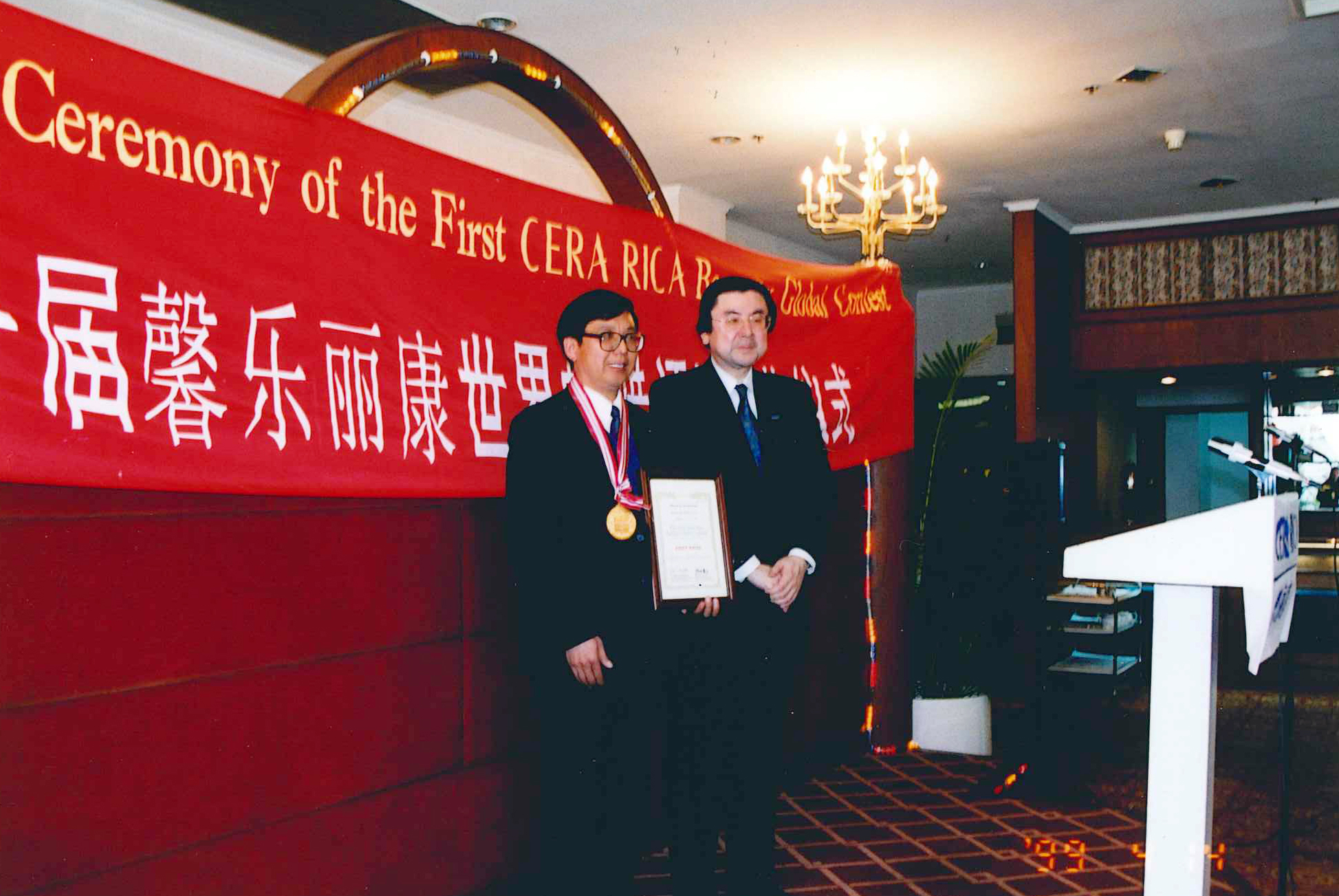
・Participated as a panelist at the United Nations University World Conference on Zero Emissions
・Proposal for the World's No. 1 Beeswax Contest at the APIMONDIA World Congress
Vegetable extract factory opened in Taiwan
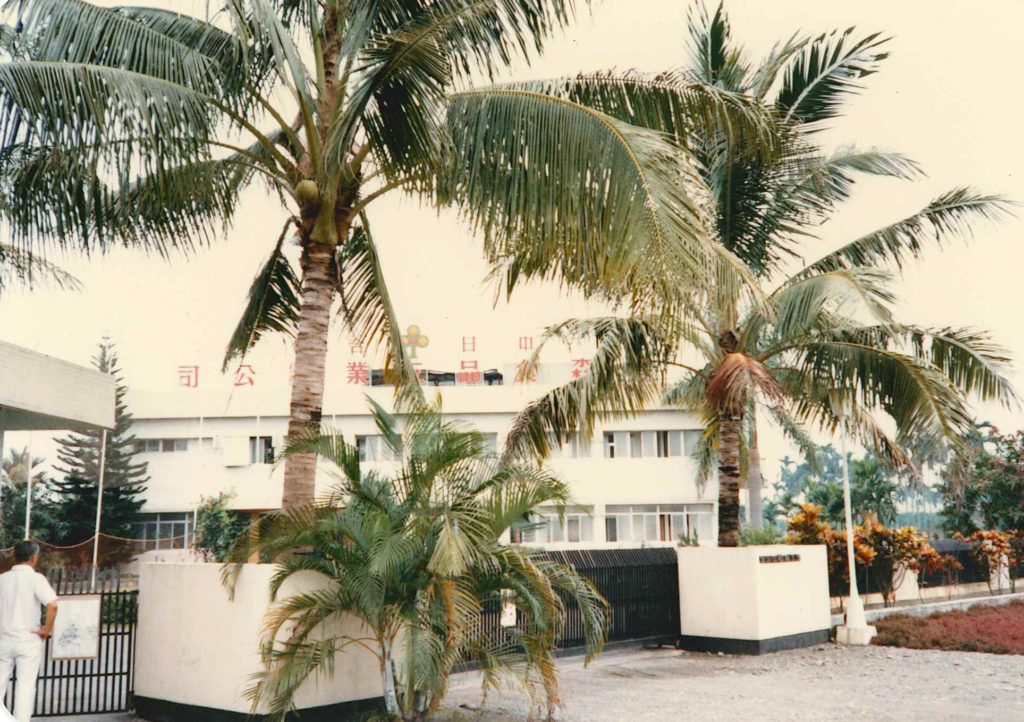
When the previous president, Yukisuke Noda, visited Taiwan to conduct a preliminary survey for planting Japanese wax trees, he noticed that farmers in southern Taiwan were struggling to dispose of onions that were too small or too large to meet the size standards for export to Japan, as onions were not a common food in the region.
Therefore, in 1972, he built a new factory in Pingtung County, southern Taiwan, to collect all the onions before they were thrown away and to process them into high-quality vegetable extracts. The new factory not only successfully solved the problem of onions piling up in the fields, rotting and emitting a terrible odor, causing great distress to farmers, but also contributed to the development of the food industry by developing high-quality vegetable extracts for yakiniku sauce and instant ramen soup, which were becoming popular in Japan at the time.
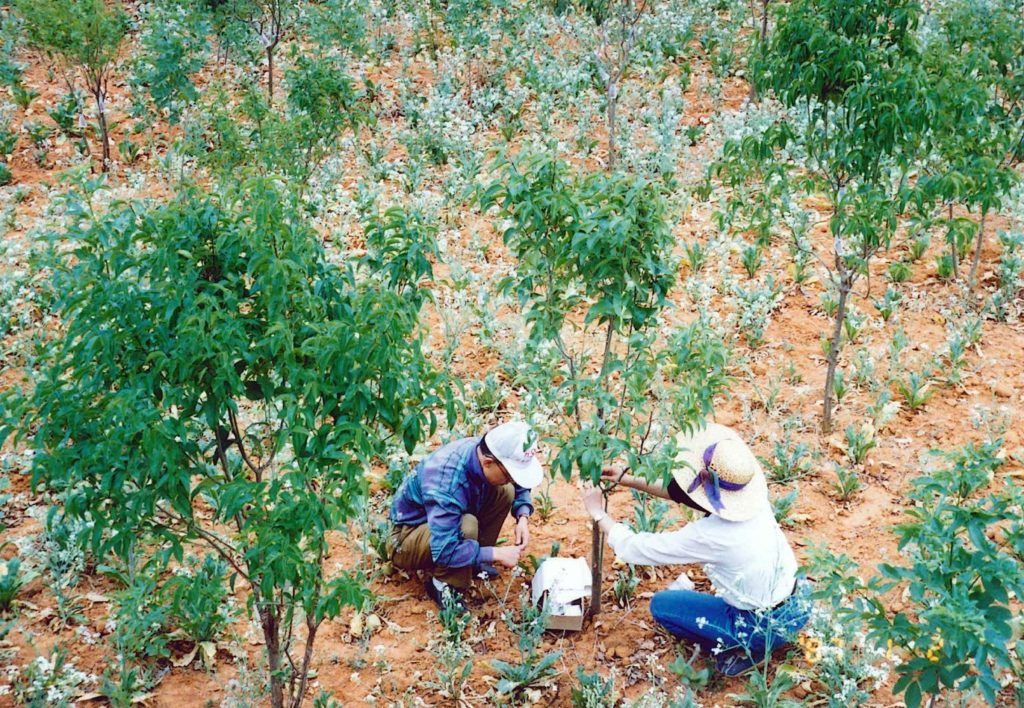
China JICA Royal Wax and Yukiro Project
Insects are the most diverse living organisms, with millions of species and having existed for hundreds of millions of years. However, apart from honeybees and silkworms that are familiar to us in our daily lives, and rhinoceros beetles and stag beetles that children love, most insects are merely annoying "nuisances" and are always targeted for "killing" with pesticides
Japanese tradition is a civilization that "makes the most" of scarce resources. It comprehensively utilizes all kinds of materials, using them completely without waste. Furthermore, it applies ingenuity in daily life, creatively expanding the range of their uses step by step. And, like a grandmother's rice bran bag, love is infused into these processes, resulting in the creation of many flavorful and vibrant products.
With this uniquely Japanese spirit, research began on the scale insect, a representative pest, shifting from the traditional idea of "killing" it to a "making the most of" approach, which became part of the Ministry of Agriculture, Forestry and Fisheries' insect industry project. This research eventually led to a collaborationCERARICANODA and the Chinese Academy of Forestry Sciences, becoming the first JICA project in China's forestry sector, aiming to alleviate China's difficulties. The result was the creation of Royal Wax/Snow Wax.
Cuba Sugarcane Wax Project
Cuba is known as a country of sugar, and historically, sugarcane has been cultivated in abundance. During the American colonial era, in addition to producing sugar, they also industrialized the sugarcane wax industry, which was a byproduct. After the Cuban Revolution, they focused on sugar production, and the sugarcane wax industry was forgotten. The
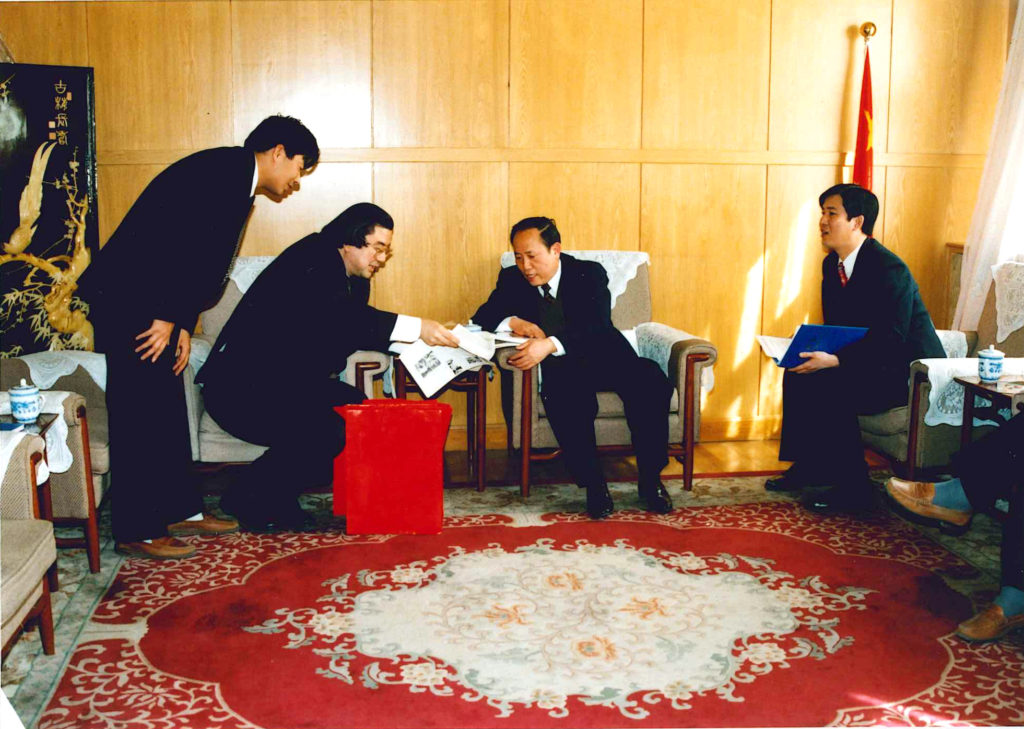
Cuban government requested our cooperation on a sugarcane wax project, and on the first day of my visit, Director Lou of the Ministry of Sugar, Cuba's largest ministry, suddenly came to my hotel room. After about two hours of passionate discussion, we both resonated with our company's dream of enriching the local people with "Life Wax =CERARICA," and I proposed that we revive sugarcane wax production together with the Cuban government, as Life Wax is a very promising resource that can be used in high-tech fields. Director Lou promised the Cuban Ministry of Sugar to fully cooperate, saying, "Go ahead and do it the way you envision, President Noda."
Our company president, having been invited to lunch by a top Cuban government official, witnessed their unvarnished lifestyle and their honest and sincere attitude of prioritizing equality alongside the people. Before we knew it, he had become a big fan of Cuba, and we proceeded to advance the Sugarcane Project between Japan and Cuba.
Held a seminar on Life Wax = CERARICA in Hanoi, Vietnam
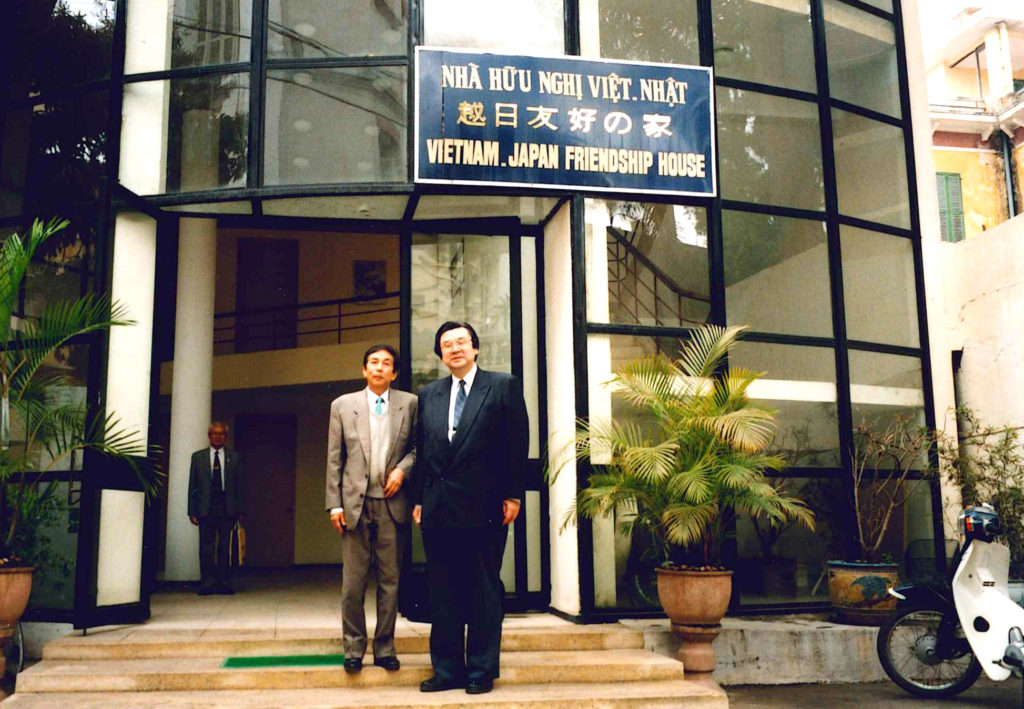
The day my father passed away coincided with the day the Vietnam War ended, and our company president, who had had a strong interest in Vietnam since his student days, heard that the world-renowned American scholar Vu Teng Phan would be giving a lecture at a meeting of the Japan-Vietnam Friendship Association, so he visited the venue. After the lecture, we were able to speak to him about the " CERARICA Concept."
, a life wax company,CERARICAwhich aims to improve the environment by adopting a unique approach of "making use of insects" rather than killing and utilizing them, and for its commitment to lifting poor people in production areas out of poverty
and realizing prosperity. This vision was brought to life by the passionate enthusiasm of Mr. Phan, who is also the president of the Vietnam Academy of SciencesCERARICAis extremely beneficialCERARICAbringing together top-level research institute directors in
Participated as a panelist at the United Nations University World Conference on Zero Emissions
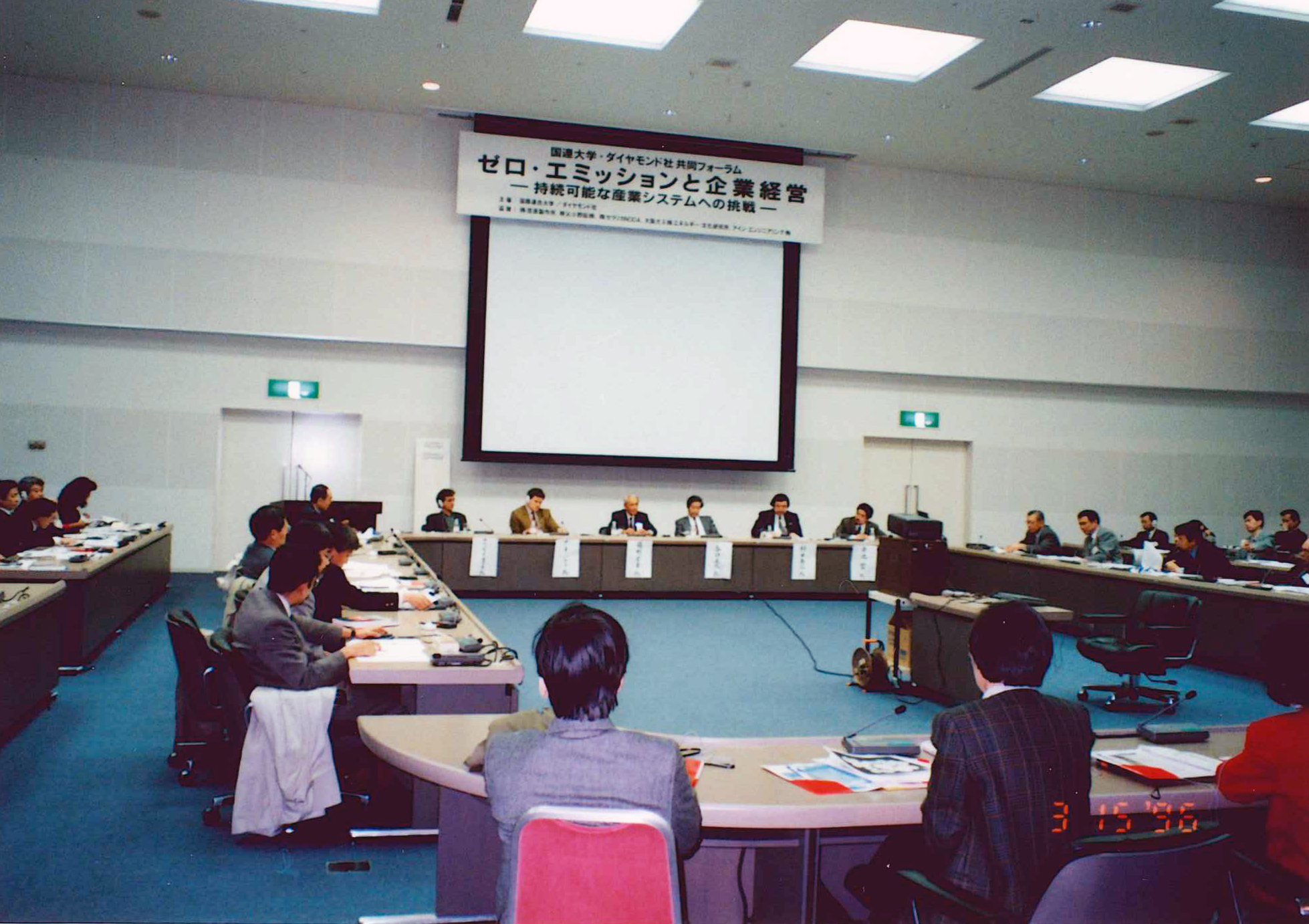
"Zero Emission" is a future concept proposed by the United Nations University in the 1990s, modeled after ecosystems and aiming to eliminate waste by skillfully combining industries from various production sectors, thereby utilizing waste generated from individual corporate activities as resources for other industries.
At the United Nations University's "Zero Emission World Conference" (attended by President De Souza, proponents Fridtjof Capra, and Gunta Pauli), our company president was invited and passionately spoke about how "CERARICA= Life Wax," born from the workings of nature and a virtuous cycle, is essentially a gift from life that realizes the ideal of "zero emissions" (forests produce no waste), receiving strong support from the proponents.
moving away from the modern "killing research" and adopting a "life-saving approach."CERARICAAt a lecture held around the same time by Daniel Bell, president of the U.S. National Academy of Sciences, and Fridtjof Capra, F. CapraCERARICAhighly praised
Proposal for the World's No. 1 Beeswax Contest at the APIMONDIA World Congress
We have been conducting research on high-quality beeswax in collaboration with the Institute of Honeybee Research, Chinese Academy of Agricultural Sciences.
Regarding beeswax, in 1995, at the International Federation of Beekeeping Societies (APIMONDIA) World Congress held in Vancouver, our company called upon member countries around the world to hold the "World's No. 1 Beeswax Contest," announcing that beeswax, as a high-tech material, would significantly improve the recording performance of compact discs. At the same time, this became a major catalyst for revitalizing the global beekeeping industry by emphasizing beeswax, a by-product that had been neglected in the beekeeping industry until then, as a resource of the future.